Showing posts with label truth. Show all posts

Wednesday, April 22, 2015

Conversion of Francis (or - Out to Lunch?)

And the Lord said, Simon, Simon, behold, Satan hath desired to have you, that he may sift you as wheat: But I have prayed for thee, that thy faith fail not: and when thou art converted, strengthen thy brethren.
  - Luke 22:31,32 [KJV]

Writing such a blog post has been particularly difficult for this revert to Catholicism.

After many years as a nominal Catholic / practicing Evangelical, I gradually began to realize that Truth must be singular. The false dogma of Sola Scriptura is ever subject to individual interpretation and can therefore never lead to anything like verifiable Truth. Real authority, established by God, must trump personal and subjective interpretation of the Bible. Thus I returned to Catholicism and to the divinely established authority of the Church's Magisterium. It is no accident that 'Catholic' simply means 'Universal'.


It must be acknowledged that the 70s and 80s saw a steady deterioration into what can be called soft heresy. You know what I mean: Discounting or soft-pedaling the seriousness of such things as abortion, contraception and homosexuality. Studiously avoiding certain teachings out of fear of disturbing anyone. Denying or downplaying the hard reality of God's righteousness and the fact of eternal judgment. In lieu of teaching, sanctifying and governing their sheep, pastors increasingly limiting their 'ministry' to consoling, nurturing and affirming. Instead of warning people against the imminent dangers of hell, comforting them on their way thither.

The sad fact that many Catholic 'faithful' and clergy were believing and practicing such soft heresies was troubling, but did not detract seriously from my faith in the aformentioned Church authority. Always needful is a clear distinction between Church teaching and the beliefs and practices of individual 'Catholics', including clergy. The solid teachings remain a sure anchor, and the Magisterium - i.e, the bishops collectively in union with the Pope - could be counted upon to faithfully safeguard and transmit those teachings. I took no small comfort in the fact that while other denominations were altering their doctrines to conform with worldly values and norms, the true Church would never follow suit.

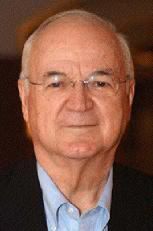
Yet here we are in 2015, and I must declare honestly that what I thought could never happen is in fact happening, has been happening for some time. I first began having some misgivings over 5 years ago, and have seen practically nothing since then to relieve my doubts. To the point where, starting about two years ago, some kind of threshold seems to have been crossed. When the reigning pontiff says he cannot judge homosexual clergy, he is in fact publicly confessing that he is not their pastor. When a majority of bishops, led by the bishop of Rome, meet to discuss the possibility of changing Church teaching on marriage, something is seriously, seriously, seriously amiss.

The gut-wrenching question I find myself asking is: Are these realities reversible? May the devout Catholic pray in good faith for the conversion of Francis, per Jesus' words to Simon Peter? Or has it gone way beyond that? Have the vast majority of the episcopacy left their posts? Have they abdicated their authority as pastors? Are they collectively Out To Lunch, leaving shepherdless the dwindling minority of faithful Catholics? Are those faithful few left as orphans in spiritual exile?

Tuesday, November 24, 2009

Love, hate, and indifference

Speaking of hate crimes and the homosexual, the real hate criminals are those who hate or fear homosexuals so much that they consign them to hopeless stasis, deny them the possibility of repentance and forgiveness.

As Pope Benedict has pointed out in Caritas In Veritate, love and truth are inseparable.

Only in truth does charity shine forth, only in truth can charity be authentically lived. (¶ 3)
Jesus, who is Love incarnate and Truth incarnate, speaks the truth to the sinner and so offers moral freedom to the sinner. (John 8:31-36)

Real love, then, upholds the truth and makes freedom possible. Denial of truth and freedom is a form of hatred. The only question is which is worse, which is the opposite of love: active hatred, or passive indifference. The following from The Manhattan Declaration is a noble aspiration, worthy of pursuit:

And so it is out of love (not "animus") and prudent concern for the common good (not "prejudice"), that we pledge to labor ceaselessly to preserve the legal definition of marriage as the union of one man and one woman and to rebuild the marriage culture. How could we, as Christians, do otherwise?

Sunday, October 11, 2009

Hate crimes

Though they know God's decree that those who do such things deserve to die, they not only do them but approve those who practice them.
  - Rom.1:32
The notion of exacting more severe punishment for a 'hate' crime requires the deification of government bureaucracy. That is to say, it requires one to ascribe to government authorities the divine attribute of knowing the inner workings of the human mind, of judging not only the criminal's behavior but the feelings which inspired that behavior.

But, as a god, our government is woefully incompetent. So, rather than really discerning the thoughts and intentions of the heart, it can only assume that crimes committed against certain individuals must be necessarily inspired by hatred, and therefore more heinous. Such assumptions are bound to be wrong most of the time.

Being a worshipper of the living God, I despise false gods. So I feel compelled to deliberately defy this latest arrogance. Does our lordly government now call it a crime to hate homosexuals? To hate homosexuality? To hate sodomy? Well, then, I have a few statements to make very openly and defiantly:

- Homosexual acts are sins against nature.

- Sodomy is one of the few sins that cry out to heaven for vengeance. (Gen.18:20-21)

- Homosexuality is intrinsically disordered, and no government authority can legitimize it.

- Homosexuality, like most addictions, is difficult but not impossible to cure.

The point is, I fear the true God, and earnestly seek to agree with Him. If the government now considers that a crime, bring on the handcuffs. Truth is truth. Those who oppose God's truth are fools, and deserve no respect, regardless of their political power.

Friday, July 17, 2009

Love in Truth

The alignment of political and ideological camps is weird and illogical. For example, I have never been able to understand why most political conservatives, at least the most vocal ones, seem so opposed to earth-friendly, "green" principles, and to despise what they call "enviromentalist wackos". Is the uninhibited use of fossil fuels, for instance, really a traditional value? Is unfettered capitalistic development truly "conservative"?

Likewise, I can't figure out why tax-funded abortion, embryonic stem cell exploitation, and euthanasia should be enshrined as liberal or progressive values. What's so "liberal" about such a despairing, inhuman, and cruel cheapening of human life?

Or again, those who champion "gay" rights seem inevitably to posit their ideology as one of "love", while fearing or deriding those who hold to the unique sanctions of traditional marriage. The cornerstone of civilization and of human love is portrayed as "hate", and its perverse dismantling as "love". Go figure.

Yet the need to align with one's camp is so strong that the values and slogans are embraced, logic be damned.

The above is one reason why I am a Catholic. The Church founded by Christ is one camp whose values remain logically consistent through the whole spectrum of issues. Not that all Catholics are perfectly faithful to the principles, but the principles themselves are solid and consistent. To a logician, this is vitally important.

Pope Benedict XVI Pope Benedict's latest encyclical is a wonderful example of this. Its title, Caritas In Veritate ("Love in Truth"), sets the tone. Love and truth are not opposed, but complementary.

Only in truth does charity shine forth, only in truth can charity be authentically lived. (¶ 3)
Likewise, love and logic are complementary.
Intelligence and love are not in separate compartments: love is rich in intelligence and intelligence is full of love. (¶ 30)

Within this fusion of love and truth, faith and reason, Pope Benedict straightens out all kinds of tangled and confused ideas. As a result, there is something in this encyclical for everyone, regardless of their ideological camp. And there is something in Caritas In Veritate to disturb every ideologue, too. The principles of economic development, environmental care, the sanctity of human life, and the central importance of stable traditional families and other topics are all brought together in a way that makes perfect sense, though no single political ideology is wholly embraced. The reason for this is simple: The alignment of political and ideological camps is weird and illogical, while Caritas In Veritate is the logician's answer, a breath of fresh air to one who loves truth and esteems love.

Slow that I am, I have only begun to appreciate the depths of this important encyclical. Please read it for yourself.

Saturday, June 27, 2009

Truth

To love only to seek - on condition of never finding - to want only disquietude, that is to hate truth.
  - Jacques Maritain

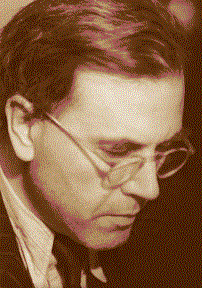
αληθεια Beneath all controversial issues, at the very root of things, lies the question about truth. Does truth exist? Can the human mind know truth? This is the pivot; upon it hinge all moral and cultural consequences.

If truth does not exist, or if it can never be known, all other moral and ideological debates are pointless. All I have in that case are my own subjective conjectures, the accumulated observations of my limited 58 years. All we have collectively are opinion polls - the aggregate pool of multiple subjective conjectures. The most heinous crime is acceptable and the most natural affections are shunned if only a majority will say that it must be so. Tomorrow, a new cultural wind may blow, and different values ascend. Nothing may be relied upon except the current poll.

But if truth exists, and ours minds can know it, the story is completely different. The truth becomes objective, solid, and reliable. The truth remains true, even if few or none follow it.

The Catholic faith assumes this to be the case. The word Catholic simply means universal; it signifies that the principles and dogmas of the Faith apply to all people in all parts of the world of all ages, races, backgrounds, and aptitudes, throughout all of human history. The tenets are absolutely reliable and trustworthy.

We get this from Jesus Himself, who said

". . . For this I was born, and for this I have come into the world, to bear witness to the truth. Every one who is of the truth hears my voice."
  - John 18:37b [RSV]
Moreover, Jesus is Truth Incarnate. ". . . I am the way, the truth, and the life. . ."  (John 14:6) 

Ideas have consequences. This idea has foundational consequences.

Saturday, January 10, 2009

From table to chair

This post, long overdue, follows up on two previous posts. Here's the synopsis:

Our Superior, WI diocesan paper, The Catholic Herald, was regularly publishing a number of softly heretical items, the most inane being Fr. Richard McBrien's weekly column. In April 2007, we wrote a letter of complaint on this which was published, but when several liberal readers responded with complaints about our complaint, we were not allowed to reply further. (This is quite puzzling, since the opposition's mantra was that of allowing a free exchange of diverse ideas.) The May 2007 blog post entitled "Roundtable" was an attempt to provide a forum in which folks on both sides of this issue could debate openly. The debate question: Should Catholic publications embrace diversity of thought, or teach Catholic truth clearly?

Well, a few loyal Catholics joined the discussion, but no one on the staff of the Herald, nor anyone in sympathy with the McBrien agenda bothered to come and defend their viewpoints, so it was a fairly one-sided table, and the "debate" soon petered out. (Ref. "Folding table".)

Speaking of Peter: that summer, a new bishop, Peter Christenson, was consecrated and appointed to the Superior diocese. This past summer, after one year of getting to know the diocese, this successor to the Apostles acted, and the McBrien column was quietly dropped, thanks be to God.

You Catholics already know that the bishop's cathedra is not a chair of repose, but of Apostolic authority, traceable to the authority of Jesus himself. This is an essential Catholic strength. As a Catholic son, I must say that tables may be OK, round or otherwise, but a solid chair is so much better.

Wednesday, August 27, 2008

Loud and clear

Nancy Pelosi You've heard, of course, about Nancy Pelosi's misrepresentation of Catholic teaching. Ho hum, no news here. Just another pro-abort "Catholic" Democrat pretending to be in good standing with the Church.

But - thanks and glory be to God - this time was different. This time, the pro-abort "Catholic" didn't get away with it. Not only did a reliable shepherd like Archbishop Charles J. Chaput respond swiftly and clearly, but so did a number of other bishops, most notably Washington Archbishop Donald W. Wuerl. In fact, several Catholic House Republicans joined in, actually writing an open letter to Pelosi and demanding a correction. (As far as I know, she has yet to admit any error.)

Folks, do you realize what a watershed answer to prayer this may represent? A well-known figure publicly proclaims that Catholics may be pro-abortion, and Catholic leaders publicly refute the lie. Loud and clear.

I like loud and clear.

Let's have more loud and clear.

I hope it's not unrealistic for us to pray thus: May this be the beginning of a stronger Church, Lord. Rouse the sleeping giant, and purify Your Bride, our Church. Rouse all Your people, especially those whom You have appointed to be our shepherds, to speak the truth loudly, clearly, and with manly courage. For Your greater glory and honor, and for our salvation. Amen.

Friday, August 15, 2008

Credo ut intelligam

A fellow blogger has recently written at least two posts on the dangers of intellectual pride [1] [2] which has prompted a little introspection. But publishing one's thoughts is not a proof of pride, and so I blog on, hopeful that my love of truth is stronger than my ego, and herewith add my own two cents on the subject.

An example is worth many words. In this case, two examples, with a common theme, to illustrate both intellectual pride and intellectual humility.

Humanae Vitae After 40 years, it continues to become more painfully clear that Pope Paul VI's encyclical Humanae Vitae was indeed prophetic. The widespread acceptance of artificial contraception has led to legalized abortion, the breakdown of marriage, sexual license, and a host of other ills that currently plague our society, all of which were warned against by Paul VI. Moreover, both John-Paul II and Benedict XVI have reaffirmed the validity of this papal encyclical, and much harm has come from ignoring it.

Fr. Richard McBrien In his July 21, 2008 column entitled "Humanae vitae: After Forty Years", Fr. Richard McBrien was pleased to quote Cardinal Basil Hume, Archbishop John Quinn, and Jesuit Richard McCormick. Much more extensively, McBrien quoted some of his own previous columns to emphasize that he himself was one of the first and most consistent questioners of Humanae Vitae. He is apparently pleased with his own "foresight" in countering the Church's teaching on contraception. Within one of these self-quotes, McBrien quotes Pope Paul VI as welcoming "the lively debate aroused by our encyclical". He did not quote John-Paul II or Benedict XVI. [3]

Dietrich von Hildebrand As a catechumen coming into the Catholic Church in the 1920's, a young Dietrich von Hildebrand likewise asked why birth control should be considered immoral. When told that he must accept the Church's teaching authority, he immediately replied, "Credo ut intelligam" - "I believe in order to understand." Such remarkable humility reflects a childlike faith, not in one's own insight, but in the Church. That, though composed of sinners and always in need of reform, she is God's holy ark of salvation, and can be trusted to teach the truth.

This young philosopher eventually became a modern doctor of the Church, noted especially for his brilliant contributions to doctrines on marriage and sexuality, and was among the first to defend Humanae Vitae in 1968. His widow Alice continues to speak and write on these themes today. Cardinal Joseph Ratzinger wrote of von Hildebrand:

I am personally convinced that, when, at some time in the future, the intellectual history of the Catholic Church in the twentieth century is written, the name of Dietrich von Hildebrand will be most prominent among the figures of our time.

This illustrates, I believe, the wonderful irony that intellectual humility is the door leading to true intellectual prowess, being unimpeded by the shackles and distortions of ego and error.


Note 3: Fr. McBrien's website does not permit me to link directly to the "Humanae vitae: After Forty Years" article, but you may go to richardmcbrien.com and navigate to it.

Friday, July 25, 2008

Is this what you mean?

22-week-old aborted baby
Priests for Life has launched a special project called "Is This What You Mean?" It aims to:

 1) Reveal the nature of the abortion procedure to the public, and

 2) Challenge public officials and candidates who support the legality of abortion to admit what abortion is.

The idea is simple. It's not a partisan trick or threat, nor a complex argument, Senator Barack Obama but a call for honesty. Just confronting the abortion supporter, especially the public candidate or office holder with the reasonable appeal: Let's be sure we understand each other here. When you say "abortion", is this what you mean? We just want to make sure we're talking about the same thing.

Go to this page to learn more, to watch YouTube videos and read quotes from abortionists, and learn what an abortion procedure is like.

Then spread the word. Announce this on your own website or blog. Email friends. Use the information in town hall meetings, editorials, etc. Ask your liberal (er - 'progressive') friends: Is this what your candidate supports? Is this what you support? Is this what you mean?

Tuesday, July 22, 2008

A repentant hippy

I have a confession to make: Jerry DePyper has not always espoused the views reflected in these blog posts. You might even say that they represent the zeal of a convert (or, revert).

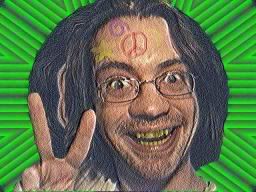
I grew up as an American, Catholic, Democrat. This was my patrimony, my identity, and it was a seamless garment; as unthinkable to become a Republican as to become a non-American. Then, coming of age in the 1960's and early 70's, I was swept along in the heady spirit of that era. A happy, groovy hippy Though not part of the drug scene, I was definitely into the "flower child" mentality - questioning authority, questioning tradition, questioning the status quo. The patrimonial identity remained intact, but became infused with new ideologies. The 'flower child' mentality became a part of the patrimony, an integral part of my identity. As a self-identified Democrat, I applauded the Democrat's 'flower child' promise to end racism, poverty, and war. As a Catholic, I eagerly embraced the hippy, ecumenical ideal of "We are one in the Spirit". This meant rejecting 'rigid dogmatism' and following many heterodox ideas. But the patrimonial identity remained; I still considered myself a good Catholic. I was a Catholic, Democrat hippy.

Come on, people now, smile on your brother
Everybody get together, try to love one another
 right now.

The hippy image faded, but not the ideological identity. I voted for George McGovern, Jimmy Carter, Walter Mondale, and Michael Dukakis. Senator Barack Obama Somehow, I managed to convince myself that their horrible values and policies were outweighed by their good promises. In reality, it was my life-long identity as a Democrat which made want me see positive values in these candidates. Had I continued in this vein, I suppose I would now be supporting Barack Obama.

I was no longer a hippie - in fact, I was no longer a young man when a very close friend, a man just a year older, stated frankly that our generation had created a horrible mess. This shook my world, and I resented my friend's attack upon our generational and ideological identity. But I had to admit he was right; our ideology was not working as advertised. This was a terribly gut-wrenching moment, a threat to my identity. Perhaps it's when I finally took the 60's attitude to the hilt, and began to question the questions.

Painfully weaning myself of life-long ideological habits, the long path back home was guided mainly by two emerging convictions: First, there has to be such a thing as truth, and there has to be but one version of it. Relative truth is an oxymoron. Second, the wholly vulnerable and wholly innocent babies must be defended; this was certain. Those who were so defending must be right; those who were not must be wrong. (By their fruits you shall know them.)

You can read in this blog the result: 'right-wing extremist', 'conservative', 'orthodox Catholic' - employ whichever label you like. (Here's a hint: I will not be voting for Obama.)

Why do I tell this story now? Maybe just in case someone else of the baby boomer generation happens to read it. Let me break for you the gut-wrenching news: our generation has made an awful mess, and you do not have to carry this around any longer as your inherited patrimony. You can make a clean break, embrace truth, and join in making amends.

Wednesday, March 12, 2008

What is truth?

To love only to seek - on condition of never finding - to want only disquietude, that is to hate truth.
  - Jacques Maritain

αληθεια Before Pilate, Jesus said

". . . For this I was born, and for this I have come into the world, to bear witness to the truth. Every one who is of the truth hears my voice."
Pilate said to him, "What is truth?"
  - John 18:37b,38 [RSV]
Pilate's question seems unmistakably cynical, a clear implication that, to Pilate, there is no such thing as truth, or that it cannot be attained.

It strikes me that this same disparity of viewpoints toward truth exists today, and explains much of the widening polarity in our culture. Both in politics and in the Church, the liberal or progressive thinker doesn't believe that the truth can be known with any degree of certitude. Thus, abortion may be lamentable, but not an absolute evil. Our definition for marriage or for family can be fluid, and can change as our understanding enters into broader horizons. Religions are all basically the same; none should be disparaged, and none should be especially esteemed above others. The conservative insistence upon unchanging values appears rigid and stubborn, probably rooted in fear, bigotry, and ignorance. The conservative's claim to know the truth seems arrogant and elitist. After all, no one can really know anything with any absolute certainty, so there can be no such thing as unchanging truth or immutable values.

At the other end, conservative thinkers often try to reason with their liberal friends, using the rigorous rules of logic, dialectic, deduction, induction, Scriptural exegesis, etc. But the arguments fall onto deaf ears, or onto ears that don't recognize such language. It's frustrating, like trying to nail Jello to the wall.

And so, we have an impasse, an ever-widening breach. Now, I don't know how one would go about bridging this gap, or if that is even possible, or desirable. But it occurs to me that the exchange between Jesus and Pilate may mirror the confrontation in our own culture, and so may shed some light upon what's really at stake here.

In many passages besides the one already cited, Jesus speaks of truth and seems to put great emphasis upon it. He says, for example, that ". . . you will know the truth, and the truth will make you free."  (John 8:32)  In the early Church, the apostles likewise take up this mantle and speak quite forcefully for truth and against erroneous doctrines.

In perhaps the most telling passage, Jesus identifies Himself as Truth personified when He says, ". . . I am the way, the truth, and the life. . ."  (John 14:6)  Taking this utterance at face value, one would have to conclude that to seek and embrace the truth is to seek and embrace Jesus; to deny or avoid the truth is to deny or avoid Jesus. (Of course, someone who denies truth would probably not take this or any other Scripture at face value anyway [sigh]).

Well, maybe it all just comes down to whom you believe is the more laudable role model: the open-minded Pilate, or the narrow and rigid Jesus.

Friday, February 8, 2008

Knowing good and evil

When Adam and Eve ate the fruit of the tree of the knowledge of good and evil, just what did that mean? At face value, it seems to simply say that Man became a moral being, capable of knowing right from wrong, and capable of freely choosing either. We cannot be amoral like the animals; we can only be moral or immoral.

No less than John Paul II has suggested a deeper meaning as well. Namely, that the original sin of Man involved deciding what is good and what is evil, in direct rebellion of God's authority. Note the serpent's words: "You will be like God, knowing good and evil". Rather than agree with God's judgment of sin, we want to make up our own rules.

Sound familiar? Of course it does - we hear this all the time, even perhaps from our pulpits. "Each person must find his or her own truth" or: "Only you can decide what is right and wrong for you" or: "Sin is whatever you feel it to be" If this relativism is questioned, the inevitable out-of-context comeback is "Judge not, lest ye be judged."

Whether you call it a serpent's hiss, or "Values clarification", it's still a deception. Repentance starts with agreeing with God, and recognizing that what He says is good is good, and what He says is evil is evil.

Friday, January 11, 2008

John's unwelcome light

In response to my complaints against the moral corruption of our culture and my own abysmal failures, someone recently remarked (not via a blog comment) that my 'dark mood' reminded her of John the Baptist crying out in the wilderness.

John the Baptist Leaving aside the nonsense of comparing my yelpings with the Baptist's prophetic fierceness, I was puzzled by the adjective 'dark'. Surely John was the opposite - a strong beacon of light in the midst of murky darkness. Of course, sometimes light is an unwelcome thing. The window that, at night, appears clean shows its hidden dirt when the morning sun hits it. I may prefer the illusion of darkness, and regret the light, which seems to make the window dirty. Likewise, John's light was unwelcome, exposing men's hidden, secret sins.

We like John pointing us toward Jesus, but we don't like him pointing out our sins; that seems 'dark'. The question is: can we have it both ways? Can John point us to Jesus without also pointing out our sins and our absolute need of a Savior? The present generation seems to demand this very thing... Tell me about the Good Shepherd, but don't tell me I'm a lost sheep. Tell me about God's infinite love, but not of his hatred for sin. Talk to me softly of pardon, healing, and comfort, but don't mention my need for repentance.

John, true beacon of light, doesn't offer such slick illusions. He offers light, which exposes our sins and points us toward Jesus the Savior.

Monday, December 31, 2007

Milksop Christianity

I would like to commend those few Catholic parishes in which yesterday's 2nd reading was proclaimed in its long form (Col. 3:12-21) rather than in its short form (Col. 3:12-17). The short option omits the part about wives being subject to their husbands. Rather than appear (gasp!) old-fashioned, or (double gasp!) patriarchal, or risk (triple gasp!) offending someone, most parishes simply skip the risky portion. A few priests may feebly attempt a clever it-isn't-what-it-looks-like dismantling of the text. Most just ignore it, and hope nobody notices.

Trouble is, Christianity is, and has always been, a patriarchal religion, as is Judaism. Indeed, marriage itself is a patriarchal institution, and civilization, founded upon marriage, is founded upon patriarchal principles.

A few prophetic voices have begun to descry and decry the effeminate, wan softness of our degenerate culture, a culture that is embarrassed by patriarchal authority. I would say 'Amen' to these prophetic cries, and point to Jesus as a manly man who likewise expects counter-cultural strength in his followers.

It's high time for Christians to realize that the cultural rejection of patriarchy is ultimately a rejection of the family, of traditional moral values, and of Christianity itself. And it's high time to stop our milksop acquiescence towards this prevailing attitude, and unflinchingly proclaim the timeless truth.

Monday, July 16, 2007

Folding table

folding table Over a month now since any comments have been added to the 'Roundtable' piece below, so I guess that particular discussion has petered out, and I will now remove the sidebar invitation. (But feel free to continue to comment on that or any other article in this blog.)

Thanks to 'Summerfields' and 'Deepwoods Mike' for your comments in the Roundtable. I was hoping for more of a sharp exchange, a real roundtable, and so was sorry that no one of opposing viewpoint expressed any comments. Especially disappointed that no Herald staff responded to my specific invitation for them to explain their policy (cf. our email of June 8).

That policy continues to mystify me. Week after week, the Herald pays money for the dissident comments of Father McBrien, ostensibly in the interest of a broad-minded freedom of thought. But the Herald will not contract with true Catholic writers, and will only print a single comment by any one reader, with no opportunity for clarification or rebuttal. Their support for freedom of thought would seem to be rather one-sided.

Saturday, May 19, 2007

Roundtable

Catholic publications: Embrace diversity of thought, or teach Catholic truth clearly?

Lenore and I recently wrote the following letter to our diocesan newspaper, the Catholic Herald of Superior, WI. The letter was printed in the May 3 edition:

In this information age, we can easily experience information overload. TV, Internet, books, all combine to create a cacophony of ideas and opinions on every subject imaginable. This may be quite suitable for political and ideological controversies, but the truth of our Catholic Faith must surely rise above such mere subjectiveness and speculation. The highest purpose of Catholic journalism must be seen in this light: to shine the light of the true Faith as a sure beacon and reliable guide in the midst of the chaotic and confusing cacophony in our world.

By publishing the left-leaning and often heretical ideas of Fr. Richard McBrien and Fr. Ron Rolheiser, the Catholic Herald is failing to achieve this high calling. Weighing their own supposed academic prowess and subjective opinions against 2000 years of consistent Church teaching and billions of believing saints, these two priests have no problem preferring the former. But such insufferable hubris is not the primary problem. To give these two a podium is to undermine one's own reliability as a source of Catholic teaching. Such has been the Catholic Herald's error.

Surely more authentically Catholic writers can be found -- writers such as Matt C. Abbott, Amy Welborn, or Russell Shaw, to name a few -- who have consistently written intelligent reflections on our Faith without departing from its truth. We call upon the Herald to replace McBrien and Rolheiser with real Catholics. Enough cacophony!

The May 17 edition contained 6 response letters, all of them opposed to ours, although we also received many favorable responses in person. Regretfully, The Herald does not include letters to the editor in its online version, so links to the written responses cannot be included here.

In light of the interest shown, this blog post is an invitation to engage in a roundtable discussion on the proper role of Catholic publications in the marketplace of ideas. Feel free to click here or on the comment link for this post (below) to read the roundtable discussion, and to add any comment you like. No comments will be edited or deleted unless they are obscene or exceedingly uncivil. The first comment is our letter as sent to The Herald in response to the 6 unfavorable responses.

Sunday, April 15, 2007

Homosexuality and same-sex marriage

We think that the sins we hug tight are ourselves, but we are wrong. They weigh us down, they deform us, they obstruct our sight.
  -Anthony Esolen

Having mentioned it in a few previous posts, this post is my endeavor to focus on the subject of homosexuality and same-sex marriage...

Tolerance

Tolerance is commonly invoked as an argument for legalizing or sanctioning same-sex marriage. Namely, that the mainstream majority heterosexual world must learn to accept people who are different, and not fear or hate homosexual individuals.

I have no problem with this sentiment as far as it goes. Certainly we should neither fear nor hate any other individual or group of people. But accepting people does not mean accepting all behavior without question. Tolerance, as i have argued in a previous post, does not necessarily entail the abandonment of behavioral standards.

Justice and equity

Another major premise is that allowing same-sex marriage is simply a matter of fairness and equity, that it is unjust to withold this basic human right from a group of people who just happen to have a different approach to sexuality.

The problem here is with an illogical view of marriage as a 'right', defined by human society. The unspoken assumption is that by altering the definition of marriage, we can change what it is. But true definitions don't work that way. Human rights, at least the important, inalienable ones, are natural rights, determined by nature. That's what makes them inalienable and universal. Likewise the real definition of marriage is not subject to arbitrary change. It is what it is. (See natural law argument below.)

If marriage could be redefined to include same-sex couples, then it could also be redefined to include triples or any number of individuals. (This idea is already being pursued.) It could also be redefined to include non-human partners - someone who wants to marry his dog (or goat?). Once you start claiming the ability to redefine such things, the sky's the limit. Lest you be tempted to dismiss this as reductio ad absurdum, remember that, not many years ago, same-sex marriage would have been considered an absurdity.

Science

Some assert that, since science has proven homosexuality to be biologically determined, it must be recognized as purely natural and on a par with heterosexual behavior.

Scientific theories come and they go. There have been some studies seeming to show a genetic basis for homosexuality, while others dispute that claim. The principle of natural selection demands that, for a 'gay gene' theory to hold up, a pleiotropic argument would have to be advanced as well. That is, there would have to be a corresponding genetic benefit to offset the obvious biological handicap of the homosexual trait. To date, there seems to be no hint of evidence for such a beneficial pleiotropy. (See this article for further articulation of this and other points.) Other theories currently being advanced point to either developmental causes or non-genetic organic (chemical or microbiotic) causes. While far from certain, this general tack seems to be more plausible than the fading 'gay gene' theory.

This is all interesting, but not terribly germane. The debate over what underlies homosexual tendencies can never address the nature of marriage, or its heterosexual essence. Neither can science ever really address the rightness or wrongness of human behavior. I suppose that moral theology and legal jurisprudence may both draw from the well of scientific knowledge, but science itself must be concerned only with empirical observation, and be silent on matters of judgment, else it ceases to be science and becomes ideology instead. (See my Epistemology post.)

Consider: There may well be organic or genetic factors that dispose some individuals to alcoholism. Would this make the consumption of alcohol into a human right? (Ask a highway cop that hypothetical question.) In the same way, the question of whether homosexual behavior is chosen or biologically determined is an interesting question, but it has no real bearing upon whether the behavior should be sanctioned.

Scripture

Due to man's inherent religious instinct, many have attempted to justify homosexual behavior on Scriptural grounds.

This invariably involves 'discovering' the sin of Sodom (Gen. 13:13, 19:4-11) to be inhospitality rather than homosexual rapaciousness. Further, stringent Mosaic laws (Lev. 18:22, 20:13, Deut. 23:17) against homosexual relations are facilely dismissed as outmoded and irrelevant. In the New Testament (Rom. 1:26,27, 1 Cor. 6:9, 1 Tim. 1:10), the Apostle Paul is condescendingly stereotyped as a homophobe, or as an unthinking product of the narrow culture of his day. (Of course, the moderns making this charge are not shaped by their own cultural biases!) And, most wonderfully, Jesus' lack of explicit mention of the subject is taken to mean that He endorses homosexuality.

This 'explaining away' of relevant texts is a classic example of Scriptural eisegesis, the reading into Scripture to attain a predetermined interpretation. Moreover, it betrays an attitude of hostility or at least condescension toward the Bible. Rather than docilely receiving Scriptural truth as a disciple should, such eisegesis involves a rather arrogant critiquing of Scripture, judging the Word of God instead of allowing oneself to be judged.

Rather than turn this blog post into a lengthy Bible study, i would invite anyone interested to search the Scriptures for yourself. If you avoid the heroic intellectual gymnastics described above, and stick to an honest exegesis, letting the Bible teach you, i think it will be obvious enough that every Bible passage that speaks of homosexual activity, in both Old and New Testaments, clearly treats it as sinful.

Love

Following from the above misunderstandings, many assert that Christian love demands the acceptance of same-sex relations as being normal and good.

But true love isn't characterized by a bland approval of everything. This would not be love, but complacency. Christian love flows from love of God, and from a desire to obey and honor God in all things. The Christian is commanded to love the sinner but hate the sin. To do less is actually a failure to love as Jesus commands us to. (Ref: the opening quote above.)

Jesus loves the sinner, and then calls the sinner to repentance and to holiness. That's what real Christian love looks like.

Defense against aggression

Homosexuals are often portrayed as a persecuted minority unjustly attacked and oppressed by the powerful majority. This may be the silliest argument of all.

With very few exceptions, the popular movement to resist same-sex marriage is just that - a resistance movement. The proactive aggression is clearly coming from the militant gay culture, seeking to overthrow centuries-old social and legal norms. The counter-movement seeks to protect the institution of marriage and the family from such undue and destructive aggression.

The arguments for tradition

Although the pro-family counter-movement is mainly a resistance and a reaction to militant homosexual advocacy, it also involves several of its own proactive and fundamental points:

Marriage as foundational

Briefly, this argument is for recognition of marriage as the very foundation of civilization. The sanctioning of heterosexual monogamous marriage advances the domestication of men, the protection of women, and the rearing of children in stable environments. It provides men with the means of knowing their children and thus the motivation to provide for them. It allows men to become co-workers with other men instead of rivals. In other words, marriage makes civilization possible. This is not to claim that civilization has perfectly achieved these benefits. It is to say that marriage is the means of achieving them. Other types of social arrangements cannot advance these same essential principles.

Therefore, to the extent that a society embraces and is founded upon marriage with all its rights and responsibilities, it will be civilized. To the extent that it eschews these principles, it will cease to be civilized. Do not imagine that man became civilized and then decided to 'invent' marriage. You could even say it was the other way around: Marriage 'invented' civilization.

From this simple point it can be seen that any redefinition of marriage would detract from these foundational principles. This would be, in effect, to move away from civilization and toward savagery.

Natural law

Closely associated with natural rights (life, liberty, etc.), natural law is law which is determined by nature, and so is valid even in the absence of statutory law or positive law.

So, natural law regarding marriage derives from the essential nature of marriage. In its very nature, marriage can only be the pairing of a man and a woman. The complementarity, mutual dependency, and potential fecundity of this arrangement are of the essence, and objectively so, not subject to arbitrary interpretation. (I also explored this thought further in a previous post.)

Common law

What nature is to natural law, history is to common law. The plain fact is that for centuries upon centuries human societies and their governments have recognized marriage as being between a man and a woman. The long-standing precedent is an important argument in its own right.

Some have disingenuously argued that, just as the long-standing institution of slavery was abolished, so should the common law precedent of monogamous heterosexual marriage be revisited. But for a long-standing law to be overthrown, it should first be proven to be flawed.

The American institution of slavery, only a couple of centuries old, was clearly flawed, and so its demise was just and right. Roe v. Wade, now 30+ years old, is also flawed. The common law institution of heterosexual marriage, millenia old, is not flawed. (In fact, as argued above, it can be seen as the foundation of civilization, and thus preceding all other legal precedents.)

Love and tolerance

As noted above (and here), the Christian concept of love goes way beyond mere passive acceptance, to the much more compassionate offer of repentance and forgiveness.

It is very honest and loving to agree with God that homosexuality is a problem, not a gift. Having homosexual tendencies and temptations is not in itself sinful. Exercising one's free will to engage in homosexual acts is sinful. But it doesn't end there; there is remedy in God's grace.

Repentance and forgiveness

There is first of all the remedy of forgiveness for sin. That is what Jesus died on the cross for, so that sinners could be forgiven. He didn't die so that we could excuse ourselves, or identify ourselves with our sin, but so that we could reject sin and be forgiven. This necessarily involves repentance - agreeing with God that our sins are evil, and that we should try to avoid doing them. The good news for all of us is that Jesus keeps on offering forgiveness for our repented sins, even when we fail again and again and again and again... I suspect that the vast majority of people repeat the same embedded and habitual sins over and over. That's not good, and one should always endeavor to gain mastery over such sin. But it's not beyond God's grace. Repeated sin, when confessed with contrition, is taken care of. Sin that is excused or rationalized is not. Jesus didn't die for our excuses, but for our sins.

Healing

There is sometimes a remedy for the underlying same-sex attraction as well. Jesus can and does heal individuals, replacing their interior brokenness with His wholeness. Miracles of grace still happen.

Holiness

For many, the homosexual feelings never go away. These individuals have a heavy cross to bear, one of chastity and self-control. In such cases, the decision to bear the cross is the only 'remedy'. This becomes their path to holiness, and their very powerful means of glorifying God, achieving their own sanctification, and making the world a better place. For one very moving example, see this story.

The call to holiness is, of course, given to all. The specific cross we each have to bear on our way is unique to each one.

From the Catechism

Here's what the Catholic Catechism has to say on the subject:

Chastity and homosexuality

2357. Homosexuality refers to relations between men or between women who experience an exclusive or predominant sexual attraction toward persons of the same sex. It has taken a great variety of forms through the centuries and in different cultures. Its psychological genesis remains largely unexplained. Basing itself on Sacred Scripture, which presents homosexual acts as acts of grave depravity,[140] tradition has always declared that "homosexual acts are intrinsically disordered."[141] They are contrary to the natural law. They close the sexual act to the gift of life. They do not proceed from a genuine affective and sexual complementarity. Under no circumstances can they be approved.

2358. The number of men and women who have deep-seated homosexual tendencies is not negligible. This inclination, which is objectively disordered, constitutes for most of them a trial. They must be accepted with respect, compassion, and sensitivity. Every sign of unjust discrimination in their regard should be avoided. These persons are called to fulfill God's will in their lives and, if they are Christians, to unite to the sacrifice of the Lord's Cross the difficulties they may encounter from their condition.

2359. Homosexual persons are called to chastity. By the virtues of self-mastery that teach them inner freedom, at times by the support of disinterested friendship, by prayer and sacramental grace, they can and should gradually and resolutely approach Christian perfection.

Amen. Much more articulate than my blatherings.

Thursday, April 5, 2007

Alternate religions

Man is a religious animal. No amount of debate or theorizing or psychological manipulation can change that. It is an indelible part of human nature, just as much as language, music, humor, and apposable thumbs. The illusion of atheism is just that: an illusion. It isn't a question of whether or not you are religious; it is merely a question of whether or not you will worship God, or whether you will make for yourself some other god, an idol.

From the very beginning, man has been torn between the humble desire to worship his Creator, and the proud desire to exalt himself instead. But man has never succeeded in 'turning off' his religious inclinations. If he doesn't worship God, he will find a lesser idol. If he doesn't follow a true religion, he will make one up.

Many folks might object to this assertion, citing religion as hypocritical. Indeed, the infamy of religious hypocrisy is commonplace, so familiar and well recognized as to be hackneyed. There is the stereotypical Baptist preaching loudly against sexual immorality while carrying on an adulterous affair. The celibate Catholic priest found guilty of child molestation. And let's not forget the medieval selling of indulgences, the practice of simony, etc, etc.

Yet these examples serve to illustrate even more clearly the original assertion. Think about it. Even when he fails to live by the demands of his religion, man must believe. Rather than break off believing, he makes excuses for his behavior, at least to himself. Others see through his excuses, and rightfully call it hypocrisy. The very cry of 'hypocrite!' presumes that something genuine has been corrupted. Were religion not such a deeply seated part of our human nature, we would not object so strenuously to its misuse.

Substitutes for God - idols - come in many forms. Some people worship money, dedicating themselves religiously to its procurement and enjoyment. Some worship fame or prestige. Some politicians have literally sold their souls in the pursuit of political power and influence. Certain environmentalists worship Mother Earth as their goddess. The list goes on and on.

This last example has special significance for me, personally. I have spent the past 40 years or so maintaining a fairly keen focus on issues of conservation and environmental concerns. Only recently have i come to see that, for many, these concerns have taken on the characteristics of religious fervor. The pursuit of environmental quality based upon empirical data is replaced by a dogmatic and evangelistic zeal, demanding conversion and radical adherence to a sort of Gospel of Ecology.

One public figure has been on a world-wide tour engaging in what can only be called evangelizing or preaching. His sermons are emotion-laden pleas for repentance, on moral grounds, of the sin of producing greenhouse gases. Nor is religious hypocrisy lacking here. The same public figure, willing neither to reform his own grossly consumerist lifestyle nor to abandon his religious environmental fervor, makes excuses for himself in the form of 'carbon offset credits'. Others see through this hypocrisy, while he and many of his co-religionists apparently do not.

There are grave spiritual dangers inherent in weaving a new religion out of global warming alarmism. Idol worship and false religions always end up degrading and destroying their adherents. (Besides that, in the long run rigid dogmatism could well erode the credibility of true research on the subject of global warming, and thus counter-productively retard reasonable corrective measures.)

As much as fanatical environmental alarmism interests and troubles me, there is another wave of alternate religions that is much more pernicious. Various sects within this religious trend - denominations, if you will - advance different emphases. There is first of all the creed of Feminism, with legal abortion as its main sacrament, and artificial contraception as its minor one. That this is a religious sect is clearly seen by the howls of protest and righteous indignation that arise whenever these sacraments are threatened or challenged in any way. According to the creed of Feminism, patriarchy is seen as the Original Sin, and, accordingly, marriage and the traditional family are abhorred.

Then there is the Population Control sect, which accepts the same two sacraments, but offers its own version of Original Sin. Namely, these believers would trace virtually every social and environmental ill back to the cardinal sin of human propagation. The Gay Rights religion, with its built-in rejection of propagation, meshes well with these two, while adding its own emphases on hedonistic pleasure and redefining human sexuality.

There is, of course, much common ground between these different denominations. They all focus on a revamping of human sexuality, morality, and propagation. There is general agreement among them over the virtues of legalized abortion and of the condom. There is in all of them a strict dogmatism and evangelistic fervor that can only be characterized as religious. With some exceptions, neither they nor outsiders may think of these folks as being religious in the usual sense, but they most assuredly are. Indeed, as asserted above, we are all religious, in one way or another.

Here's my point: At the very center of your being is an exalted spot, a place esteemed above all others, a throne, as it were. The question is: Who, or what, sits upon your 'throne'? Do you bow before some other human? Is your pet ideology your all-consuming desire? Do you worship yourself? Or does God sit upon this throne?

The person who refuses or neglects to believe in and worship God is likely to believe in and devote himself to almost anything else.

Friday, February 23, 2007

Heresy

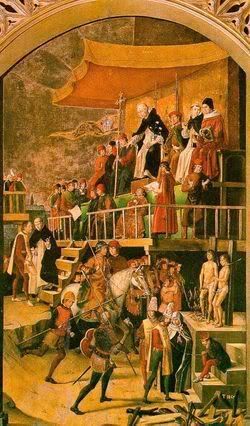
The words 'heresy' and 'heretic' may conjure up a sinister image for many, harking back to medieval times when there was much ado about such things. People willing to inflict injury, torture, and death, other folks willing to endure the same, all for the sake of some theological details. We tend to look disparagingly, or at least condescendingly, upon the primitive narrow-mindedness that would not esteem diversity of thought as we do today. Enlightened and educated, we now regard differences of opinion on such matters as a healthy thing, certainly not a cause for extreme reactions.

With that in mind, i recently looked into the etymology of the word 'heresy', and found that it was originally a quite innocuous term, even mundane. It comes directly from the Greek word αιρεσις (airesis or hairesis), which just means 'choice' or to 'choose' or 'select'. It's what the Greeks did at their market, and what you do at the mall or supermarket or video store. You pick and choose. You don't like that brand of peanut butter; you prefer this brand. That movie looks boring, but here's one that might be interesting. Certainly nothing evil or threatening in that. Choice is a good thing.

Well, i suppose it might be allowed that in some areas, a completely open-ended choosing might become problematic. We generally recognize, for instance, that in the military there needs to be a chain of command; it wouldn't work to have each individual soldier freely choosing what action to take. Likewise, in business, individual employees must sacrifice some autonomy and work to advance the collective success of the company, else the business will likely fail. Generally speaking, any human enterprise involving teamwork will necessarily also involve some curtailing of individual choice. Unity in religious faith is a special example of this. The bond of cohesiveness between believers assumes substantial agreement as to what beliefs they hold in common, else there is no bond.

But unity of faith goes beyond the teamwork priciple. The very pursuit of eternal truth presupposes that the truth is, in fact, attainable, and that other beliefs are therefore false and misleading. If truth exists at all, it must exist universally, and it must be singular. Pluralistic truth is an oxymoron. To speak of my truth is to speak of something that cannot be applied to others; i may as well speak of nothing at all. By contrast, the truth is worth speaking about, perhaps even arguing over.

The notion of pluralistic or relative truth carries with it the idea of the sovereignty of each individual self to decide what is and isn't true. So, besides being oxymoronic and intellectually untenable, this approach is essentially self-centered and arrogant, in that it vaunts the individual person's opinions above other considerations. Such intellectual myopia and self-centeredness would not seem to indicate a healthy faith. The more humble and honest approach would be to forget about pursuing my truth, and simply receive the truth as revealed and taught. Two examples:

The typical Evangelical proclaims the Bible to be the authoritative teacher of religious truth. But if that believer begins to 'pick and choose' which Scripture texts he will swear by, while ignoring, discounting, or explaining away the passages he doesn't like, that believer has ceased to be a true disciple and student of the Word, and has assumed the role of its critic and master instead.

In the same way, by claiming to be a Catholic, the Catholic believer implicitly accepts the Church as the authoritative teacher on matters of faith and morals. But if he freely selects which doctrines he will or will not hold, he is no longer a real Catholic. That is, his privately maintained beliefs cannot credibly be called 'catholic' or 'universal'.

So, to exercise airesis, to pick and choose what to believe, is incompatible with genuine faith. This is what the word heresy means.

And when you really think about it, these issues may be pretty important after all. Ideas do have consequences. What you believe will inevitably impact how you live your life, and will ultimately make our world either better or worse, depending upon whether your core values were good to start with. Those dusty theological details end up having enormous consequences.

Consider this: The Holocaust didn't just happen spontaneously. Early last century, a certain Margaret Sanger (founder of Planned Parenthood), and others, began to develop ideas about a master human race, the elimination of 'human weeds' (inferior races), and the deliberate undermining of Church authority to bring this about. Many leaders in the Third Reich acknowledged the writings of Sanger as the philosophical platform upon which they built their programs. If a strong resistance to heresy had been in place at that time, these racist and genocidal ideas would likely have remained the private thoughts of a few miserable souls, and would never have been admitted into matters of German policy.

This brings us back to the original questions. Is a concern over truth vs. heresy a dangerous attitude? Or merely rigid and antiquated? Or is heresy itself more dangerous and potentially fatal? Might those medieval folks actually have something to teach us today? Is 'agreeing to disagree' an enlightened attitude? Or a deadly one? Or, perhaps, merely a lazy and apathetic one?

Saturday, December 30, 2006

Epistemology

"I notice that you believe in God, but that you want a God who is discreet, not too exacting and comfortably unknowable" - Paul Claudel

One of my newest favorite words, epistemology - the study of knowledge. Or, how do we know what we know? There are multiple ways to gain knowledge, which is to say, an intelligent person might recognize several valid epistemological approaches. I would like to touch upon just two or three of the most significant, as i see them:

Science

The epistemology of science is based upon observation of empirical data. From these observations, the scientist looks for patterns, formulates a theory to explain the patterns, constructs experiments to test the theory, which yield more data to be observed, and the cycle repeats.

'Observation' is to be understood as any direct or indirect noting and measuring of the subject matter by the scientist's five senses, perhaps aided by instruments. Hence, the scientific method can only be concerned with the physical properties and behavior of the subject studied. That is, the proper domain of science is the physical universe, all things composed of matter and energy.

Note that this epistemology is necessarily tentative and experimental, always open to newly observed data which may alter the currently prevailing theory.

Note this also: Our perception of physical realities is a given; our senses will observe certain phenomena in the matter and energy with which we deal. But the scientific approach applies a discipline, rigor, and methodology to turn our observations more reliably into knowledge. The scientific method is absolutely the best thing going if you want to better understand our universe, and everything in it.

Theology

Not content with a single narrow epistemology, most reasonable people also recognize that much of reality does not fall within the category of physical matter and energy. Our lives are full of such non-material realities as love, honor, tragedy, beauty, good, evil...

The innate yearning of the human spirit for the Transcendant and the nearly universal recognition of moral responsibilities demand an appropriate means of knowing about these things, a fitting epistemology.

The scientific method, observing and measuring data, cannot be applied here. One cannot prove the existence of God by empirical observation alone, nor can one disprove His existence scientifically. Nor can moral principles be proven scientifically. Show me the empirical data which indicates that Mother Teresa was virtuous, or that Hitler was evil. It cannot be done, because examining and measuring mere matter and energy will never reveal any such non-physical stuff as virtue or vice.

As with physical reality, most humans will recognize transcendant and moral reality. Our dealings with moral and spiritual realities does not begin with theology. It begins with an inner experience which may seem inexplicable, beyond words. Yet we must explain it; we must try to understand it. Theology is just that - faith seeking understanding. As with physical reality, we will profit greatly from an appropriate epistemology, so as to reliably attain the knowledge we seek. No sense in a sloppy, undisciplined, or haphazard approach.

A person recognizes that the experience of faith is intensely personal, but a shared experience as well, common to Man. The best theology, then, would seem to be a didactic one, in which the knowledge is imparted from teacher to student, from mentor to disciple. And, as this would ultimately suggest, from God to Man. The epistemology of theology, then, is one of revelation and of authority, both divine authority and divinely ordained human authority. This is, in fact, the pattern we see in the three major creedal religions.

Note that, unlike the epistemology of science, this epistemology does not allow its knowledge to be experimental, tentative, or even changeable. Our theological understanding may deepen over time, but, once Truth is revealed divinely, it can't be 'unrevealed'. If ever we find ourselves saying that what was once true in a theological sense is no longer true, then we have a failed epistemology. Theological truth that is no longer valid must not have ever been so; and so our new 'truth' is unreliable, too.

Given the above, the most complete and reasonable system that i can find is that of Catholicism. God not only reveals Himself, but comes to us in the person of Jesus who gives authority to men, thus establishing the Church as 'the pillar and bulwark of truth' (1 Tim 3:15). Why single this creed out from the rest? Perhaps a future post will further explore my thoughts on this question.

(Later note: that post is Epistemology - Part 2, above)

Intuition

I'm not at all sure that 'intuition' is the right word here. What i mean by it is the kind of knowledge that just sort of comes to us, in an inner and subjective way. What one may subjectively 'know' to be true in one's 'heart'.

Not much to say about this epistemology. It's best use is probably in such things as deciding upon a career path, whom to marry, and in other such cases in which the methods above may help, but the specifics of the situation require a more personal knowledge.

Putting it all together

I like to think of myself as a well-rounded and reasonable fellow. So i embrace all of the above, each in its own proper way. Science to answer questions of matter and energy, and everything included therein. Solid Catholic theology to answer questions of faith and morals. Subjective intuition to make those personal decisions (though first guided by good science and theology).

On that note, i make these three appeals (to whom it may concern):

You scientists, please recognize the limits of your discipline, and refrain from trying to draw moral or doctrinal conclusions from your empirical observations. Doing so will only damage your credibility as a scientist.

You theologians, please recognize the demands of your discipline, and refrain from trying to alter or experiment with eternal Truth.

Those of you who routinely call upon your 'heart' to draw scientific, doctrinal, or moral conclusions... please use your brain.

pax et bonum,
Jerry