Showing posts with label reason. Show all posts

Saturday, August 24, 2013

Goodreads review: Healing the Culture

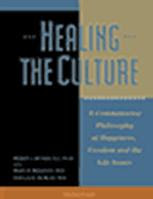
Healing the Culture: A Commonsense Philosophy of Happiness, Freedom, and the Life IssuesHealing the Culture: A Commonsense Philosophy of Happiness, Freedom, and the Life Issues by Robert J. Spitzer

My rating: 5 of 5 stars


The faculty of reason should be seen as the common denominator uniting people of various beliefs and persuasions. As rational beings, we have the privilege and obligation to use the discipline of logic and reason in addressing human difficulties and controversies.

Healing the Culture, by Robert J. Spitzer, S.J., Ph.D., qualifies as a work of reason. Spitzer employs a step-by-step common sense approach to construct a framework of timeless and universal principles, and applies those principles to current cultural crises, especially abortion and euthanasia.

Spitzer begins by defining four levels of happiness. The first level is characterized by immediate gratification, of maximizing pleasure and minimizing pain. The second level is typified by the comparison mentality, of achieving competitive advantage and bolstering one's ego. The third level goes beyond self, toward seeking the good of others. The fourth and highest level of happiness is derived from giving and receiving ultimate or transcendant goodness -- Truth, Love, Justice, Beauty. These four levels move from the immediate to the enduring, from the shallow to the profound.

Next, Spitzer draws connections between one's view of happiness and one's view of other principles: success, self-worth, love, suffering, ethics, freedom, personhood, rights, and the common good. He treats each of these in depth, but perhaps personhood, when looking at abortion and euthanasia, is the critical point.

All too often, the debate over life issues such as abortion and euthanasia are typified on both sides by political posturing, anecdotal arguments, and emotional pleas. Spitzer's reasoned and methodical approach is both refreshing and extremely important. It is an example of good philosophy that is practical, rational, and engaging.

Using rigorous logic, Spitzer examines various criteria for defining who is and is not a person. Reason dictates that such a definition not be tied to accidental, temporary, or non-essential traits, but that it must depend upon inherent powers and essential attributes, regardless of whether those attributes are currently manifest, dormant, or undeveloped. Spitzer concludes, quite reasonably, that every being of human origin should be considered a person. It is important to note that Spitzer does all this in a way that even an unbeliever would find compelling, providing that said unbeliever is honest, willing to think, and is a person of basic good will. It is also important to note the legal and cultural ramifications of these simple but profound ideas.

Pope John-Paul II repeatedly called upon Christians to build a 'culture of life'. Benedict XVI emphasized the importance of using reason in our dealings with the culture. In my opinion, Healing the Culture fulfills both of these mandates, and is well worth reading, digesting, and sharing.


View all my goodreads reviews

Thursday, October 1, 2009

Faith and Reason

Pope Benedict's theme has been the interdependence of faith and reason. To cherish faith but scorn reason is to wreak havoc on one's faith. To dismiss faith in favor of rationalism is to become irrational. Faith and reason are not only compatible; they are interdependent. We need both, or we will lose both.

Here's an example. Rotary International has recently been airing radio spots to promote its goal of teaching peace throughout the world. They're even offering scholarships to that end. To teach peace. But - - - but - - - how do you teach peace?

You see the problem. This phrase - "teach peace" - can only make sense if you ignore the truth of the human condition. Only if you are clueless about Original Sin and the fallen state of man will you imagine that Man can be educated into goodness. That is, only if you scuttle the principles of faith and its revealed truth will you grasp at this useless straw. Loss of faith leads to loss of reason.

O, by the way, Rotary International is also one of those "charities" that have no problem promoting abortion. (See "When charity goes bad" a couple posts ago.) That's rational, isn't it? Secure peace while killing the innocent. I think Mother Teresa got it right [1].


Note 1: "The greatest destroyer of peace is abortion."

Friday, July 17, 2009

Love in Truth

The alignment of political and ideological camps is weird and illogical. For example, I have never been able to understand why most political conservatives, at least the most vocal ones, seem so opposed to earth-friendly, "green" principles, and to despise what they call "enviromentalist wackos". Is the uninhibited use of fossil fuels, for instance, really a traditional value? Is unfettered capitalistic development truly "conservative"?

Likewise, I can't figure out why tax-funded abortion, embryonic stem cell exploitation, and euthanasia should be enshrined as liberal or progressive values. What's so "liberal" about such a despairing, inhuman, and cruel cheapening of human life?

Or again, those who champion "gay" rights seem inevitably to posit their ideology as one of "love", while fearing or deriding those who hold to the unique sanctions of traditional marriage. The cornerstone of civilization and of human love is portrayed as "hate", and its perverse dismantling as "love". Go figure.

Yet the need to align with one's camp is so strong that the values and slogans are embraced, logic be damned.

The above is one reason why I am a Catholic. The Church founded by Christ is one camp whose values remain logically consistent through the whole spectrum of issues. Not that all Catholics are perfectly faithful to the principles, but the principles themselves are solid and consistent. To a logician, this is vitally important.

Pope Benedict XVI Pope Benedict's latest encyclical is a wonderful example of this. Its title, Caritas In Veritate ("Love in Truth"), sets the tone. Love and truth are not opposed, but complementary.

Only in truth does charity shine forth, only in truth can charity be authentically lived. (¶ 3)
Likewise, love and logic are complementary.
Intelligence and love are not in separate compartments: love is rich in intelligence and intelligence is full of love. (¶ 30)

Within this fusion of love and truth, faith and reason, Pope Benedict straightens out all kinds of tangled and confused ideas. As a result, there is something in this encyclical for everyone, regardless of their ideological camp. And there is something in Caritas In Veritate to disturb every ideologue, too. The principles of economic development, environmental care, the sanctity of human life, and the central importance of stable traditional families and other topics are all brought together in a way that makes perfect sense, though no single political ideology is wholly embraced. The reason for this is simple: The alignment of political and ideological camps is weird and illogical, while Caritas In Veritate is the logician's answer, a breath of fresh air to one who loves truth and esteems love.

Slow that I am, I have only begun to appreciate the depths of this important encyclical. Please read it for yourself.

Tuesday, October 2, 2007

On taking offense

I'm sure you have noted, as have many others, the increase of victimhood in our culture. Probably the most common type of victim is the individual or group who claim to be offended about something, inferring that that constitutes a crime against some inalienable right of theirs.

To ask whether one has the right to never be offended is a question that pretty much answers itself, at least for most reasonable folks. The fact that lawsuits are being filed, and won, on the basis of someone's manufactured offense over holiday decorations or a school mascot, is a sad indicator of rampant irrationality.

But beyond that, it occurs to me that taking offense is a sure sign of immaturity, something that the well-adjusted adult ought never to experience. Or if he does, it ought to signal something that he needs to work on. Not to advocate for the insensitive jerk who goes about deliberately insulting others, but to suggest that the mature adult ought not let such behavior rattle his cage, so to speak. Easier said than done, of course.

If I am insulted or ridiculed or criticized, it is either 1) for something over which I have no control (e.g. my race, height, age, etc.), or 2) for something I could change if I wanted to (e.g. my faith, values, political opinions, etc.)   If it's for the former, as a mature adult, I ought already to be at peace with those factors outside of my control, in which case I can simply shrug off the insults or criticisms as pointless and moronic, and think no more of them.

If the criticism is for the latter, for something I can change, then there are two further possibilities: either 2a) the criticism is valid, or 2b) it is not. If not, I can again just shrug it off. If it is valid, then I ought to take it to heart. To be insulted in such a case is to say, in effect, that I prefer to cling to my inferior opinion and feel insulted, rather than adopt the better view.

And how to tell which criticisms are valid? Weigh the opposing views against one another, and use the faculty of reason to sort it out. Easier said than done. But it can be done. Therefore it must be done.

If you can keep your head when all about you
 are losing theirs and blaming it on you,
If you can trust yourself when all men doubt you,
 but make allowance for their doubting, too,...
   - from "If", by Rudyard Kipling
Easier said than done. But, really now, isn't it pitiful that a lack of mature strength be treated as an inalienable right?

Thursday, September 20, 2007

Reason and volition

Pseudo-atheism and pseudo-intellectualism aside, the possibility of true, rational atheism should be allowed as well. Since my last blog post, I have spent some time in perusing and cogitating and writing about the relative merits of atheistic vs. Christian/theistic systems of thought from within the discipline of logic. But the writing part, while still just the hint of an insignificant beginning, soon became much too long and involved for a blog post. If you are so inclined, you may read and judge for yourself at http://www.bmi.net/~dogpatchnorth/atheism1.php. This may be a work in progress, as I think of more to say, or respond to critical review.

Cutting to the chase here on the blog, I believe that a key point in favor of theism is the issue of free will, or volition. In the atheistic paradigm, man is composed solely of physical stuff; there is no spiritual component. This means he is driven by a combination of genetics and environment, determinism is the rule, and free will cannot exist. The theistic system allows for free will, and the Christian system positively affirms it.

Ironically, this rational point reveals the relative unimportance of rational argumentation. Sound reason may lead to faith, but if we have free will, each individual has the ability to choose whether or not to believe, whether for rational reasons or otherwise.

The opposite also applies. If we lack free will, rational disputation is pointless. The determinist says that everyone behaves in a determined way. He says to the Christian, "You believe because of your genetics, upbringing, and environment." The Christian replies, "You choose to disbelieve." It's a rational stalemate.

My earlier point still applies (see "Pseudo-atheism" below). Within the system of materialism and determinism, evangelism is absolutely pointless. Within the free will system, rational disputation may not sway many minds, but, together with other means of evangelistic outreach, it does at least make some sense.

I, for my part, have chosen to believe that I have the freedom to choose. Why? Because it's more reasonable.

Sunday, September 9, 2007

Pseudo-intellectualism

In a similar vein as the previous post, there seems to be an abundance of illogic posturing as intelligence.

One prime example of this is the individual who smugly dismisses religious faith as irrational. The presumption seems to be that folks who believe in God must be gullible fools, lacking either the intellectual competence or the honesty to question the tenets of their faith, who blindly cling to the comforts of religion. The pathetic irony is that the reverse appears to be the case. At least, I have yet to hear an avowed atheist present a rational argument for his lack of faith.

Most of the supposed arguments for unbelief end up being little more than contrived diatribes. Some priest or minister or devout Christian was guilty of such and such scandalous behavior. Or the stereotypically distorted versions of the Inquisition or Crusades are presented as somehow proving the insincerity or hypocrisy of believers. Never mind that these are ad hominem arguments. Never mind that the facts are usually distorted beyond recognition. Never mind that authentic Christians invariably admit their own sinfulness, and the sinfulness of their Church. What is perplexing is how anyone can jump from the problem of human sinfulness to an atheist conclusion, as if God's existence depended upon man's perfection. Huh?

Another tack is that of science; it is suggested that scientific advances have made religion obsolete. The mysteries that in the past confounded man and made him turn to religion are now within our grasp; we have only to discover via the scientific method that which we still do not understand. But this is also childishly simplistic, and wholly unscientific. Science can only concern itself with empirical data, with the observable traits of matter and energy. Science can never address such non-material realities as love, truth, or beauty. It is obviously beyond the competence of science to either prove or disprove the existence of God.

On and on it goes. Turns out, atheism appears to be the fragile and irrational system, depending upon blind, unthinking adherence. If there is an atheist out there who can present a cogent syllogism for his system of thought, I would love to hear it, I really would. If I could convince myself that God was just the invention of humans, life would become much more convenient. I could make up my own rules, readily justify my own behavior, and, best of all, condescendingly pity those poor foolish believers. Trouble is (sigh!), the sheer illogic of this idea stops me every time.

Tuesday, May 8, 2007

Healing the Culture: A book review

If you want to buy Healing the Culture, try this Life Principles link. You can also order it through ignatius.com, or call 1-800-651-1531.

The faculty of reason should be seen as the common denominator uniting people of various beliefs and persuasions. As rational beings, we have an obligation to use the discipline of logic and reason in addressing human difficulties and controversies.

Healing the Culture, by Robert J. Spitzer, S.J., Ph.D., qualifies as a work of reason. Spitzer employs a step-by-step common sense approach to construct a framework of timeless and universal principles, and applies those principles to current cultural crises, namely, abortion and euthanasia. While disputes over these two issues are typified on both sides by political posturing, anecdotal arguments, and emotional pleas, Spitzer's reasoned and methodical approach is both refreshing and extremely important. It is an example of good philosophy that is practical, rational, and engaging.

The book: Healing the Culture Spitzer begins by defining four levels of happiness. The first level is characterized by immediate gratification, of maximizing pleasure and minimizing pain. The second level is typified by the comparison mentality, of achieving competitive advantage and bolstering one's ego. The third level goes beyond self, toward seeking the good of others. The fourth and highest level of happiness is derived from giving and receiving ultimate or transcendant goodness -- Truth, Love, Justice, Beauty. These four levels move from the immediate to the enduring, from the shallow to the profound.

Next, Spitzer draws connections between one's view of happiness and one's view of other principles: success, self-worth, love, suffering, ethics, freedom, personhood, rights, and the common good. He treats each of these in depth, but perhaps personhood, when looking at abortion and euthanasia, is the critical point. Using rigorous logic, Spitzer concludes, quite reasonably, that every being of human origin should be considered a person, as I have noted in my previous post entitled "Persons". It is important to note that Spitzer does all this in a way that even an unbeliever would find compelling, providing that said unbeliever is honest, willing to think, and is a person of basic good will. It is also important to note the legal and cultural ramifications of these simple but profound ideas.

Pope John-Paul II repeatedly called upon Christians to build a 'culture of life'. Benedict XVI has emphasized the importance of using reason in our dealings with the culture. In my opinion, Healing the Culture fulfills both of these mandates, and is well worth reading, digesting, and sharing.