Showing posts with label Catholic. Show all posts

Saturday, July 19, 2014

Goodreads review: Imitation of Christ

Imitation of ChristImitation of Christ by Thomas à Kempis

My rating: 5 of 5 stars


No accident that Imitation of Christ is, second to the Bible, the most beloved book in Christendom. Filled with sound doctrine and timeless exhortations to religious perfection, it offers no fashionable alternatives nor shortcuts nor culturally correct 'relevance'. It is a work for all seasons and all centuries. Its target audience is the serious Christian, no one else. It simply instructs the reader on the Truth and on how therefore to live. It is to be slowly absorbed, not just read.

This passage, written in the person of Christ, may be the most perfect portrayal of the Cross that I've ever found:
Of my own will did I offer up myself unto God the Father for thy sins. My hands were stretched forth on the cross, and my body laid bare, so that nothing remained in me that was not wholly turned into a sacrifice for the appeasing of the divine majesty. [4th Book, Ch.VIII,1a]

If Imitation of Christ has a flaw, it is that it was intended for monks and hermits. As such, many of its exhortations, such as
Choose therefore a secret place to thyself, love to live alone with thyself, desire the conversation of none; but rather pour out devout prayer unto God, that thou mayest keep thy soul contrite, and thy conscience pure. [3rd Book, Ch.LIII,1c]
can not be literally practiced by, say, a married person or a parish priest, whose vocation necessarily involves contact with people. This caveat, in my opinion, does not detract from the book's profound prophetic worth.


View all my goodreads reviews

Monday, August 26, 2013

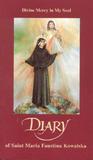
Goodreads review: Diary of Saint Maria Faustina Kowalska

Diary of Saint Maria Faustina Kowalska: Divine Mercy in My SoulDiary of Saint Maria Faustina Kowalska: Divine Mercy in My Soul by Faustina Kowalska

My rating: 5 of 5 stars


Sister Faustina writes her diary as a very frank and open disclosure of visions and locutions which she continually experienced over a period of several years. In it, she reveals her petty grievances and imperfections mixed in with an earnest and wholehearted drive for sanctity. She lived and wrote 100 years ago, having grown up in a typical Polish family, and entering religious life at about 20 years of age. Thanks to a couple of wise confessors, she was encouraged to not only follow the extraordinary visions given her but to write about them, the result being this very book.

Sister Faustina's relationship with her Savior was a spousal one. Jesus was not only her Lord and God but her divine husband. She saw herself as a bride of Christ, and her notes are marked by radical intimacy, devotion, docility and obedience. She is called by Christ to a special mission, that of spreading devotion to His greatest attribute, His mercy.

In some respects, her presentation of Divine Mercy is very much like the Evangelical notion of a simple faith conversion experience. Any soul, especially a hardened sinner, need only put his trust in the Mercy of the Savior, and he can be assured of a place in heaven; all sin is instantly forgiven, obliterated by the justifying sacrifice of Christ on the Cross. But Sister Faustina's experience of Divine Mercy is wholly Catholic in its understanding. Her revelations never consciously strayed from Catholic doctrine, and everything she experienced was subjected to the discernment of her superiors, confessors and spiritual directors.

This Divine Mercy is constantly contrasted with her own unworthiness and with the wrath of God which she and every sinner rightly deserves. It is, moreover, a very costly gift. Sister Faustina's short life was marked by an extraordinary amount of physical, emotional and spiritual suffering, which she came to see as a sharing in Christ's own salvific sufferings. As Christ's bride, it was her duty and high privilege to suffer like and with Him, and for the same purpose - to bring wayward souls to salvation. So much so that she begged Jesus to allow her to drain her cup of suffering to the last dreg. She was granted this request, and, after years of intense suffering, died of tuberculosis at the Christ-like age of 33.

Two quotes from the book:

"Some day, we will know the value of suffering, but then we will no longer be able to suffer." [963]

"If the angels were capable of envy, they would envy us for two things: one is the receiving of Holy Communion, and the other is suffering." [1804]

Let the reader - especially the serious Catholic - beware. This book could change your life.


View all my goodreads reviews

Monday, March 8, 2010

The bishops on health care

So far, no one has answered my question about federal health care legislation. Thus, my puzzlement and confusion continues and deepens.

The U.S. Catholic bishops have issued more statements on the issue since I last wrote about it, and their message remains pretty much the same. In their most recent statement, for example, which coincided with Obama's "bipartisan" summit, the bishops pled, "It is time to set aside partisan divisions and special interest pressures to find ways to enact genuine reform. We encourage the administration and Congress to work in a bipartisan manner...". Calling it a "moral imperative and urgent national priority", the bishops "...hope and pray that the Congress and the country will come together around genuine health care reform..."

There is the requisite insistence that "...genuine health care reform must protect human life and dignity from conception to natural death...", and that "...health care legislation must respect the consciences of providers, taxpayers, purchasers of insurance and others...". But the intensity and frequency of these public statements is obviously driven by the fact that pro-abortion Obama and pro-abortion Democrats on Capital Hill have made this legislation a priority. The bishops have apparently adopted this urgency and are clearly scolding those recalcitrant Republicans for being such partisan obstructionists. Such, at least, is the evident tone of their messages.

Meanwhile, here's Jerry, wondering what gives. I am no great fan of the Republican party, but I thank God for their "obstructionist" stance, and also for the bickering and infighting within the ranks of the Democrats that has delayed passage of this outrage and may, please God, derail it altogether. I'm sorry, your Excellencies, but I cannot view the prospect of federal health care mandates, especially from the current office-holders, as anything but evil and tyrannical.

Prior to any religious dogma to which I may assent, prior to any fraternal loyalty I may feel toward the Catholic Church or any other ecclesial body, I know beyond a shadow of a doubt that the wholesale slaughter of innocent and helpless human beings is a wicked crime. The stakes are enormous, perhaps apocryphal. I had thought this sentiment to be in solid conformity with the teaching of the Catholic Church. Moreover, I have not undergone a frontal lobotomy, and so entertain no tender delusions that "progressives" such as Obama, Pelosi, Reid, et. al. can ever be trusted to do what is right in this regard.

As stated in a previous post, it was through the wisdom of better Catholics than myself that I learned to mistrust the promises of Socialism, that godlessness is inherent to the positive law tenets thereof. I remember 16 or 17 years ago: the U.S. bishops boldly proclaimed with one voice that, were "Hillary Care" enacted, they would close the doors of every Catholic hospital in the nation. The clear, prophetic vigor of that action moved me profoundly, and was instrumental in making me appreciate the Catholic Faith in its unswerving and uncompromising strength. While other denominations were wilting and caving to various cultural pressures, the Catholic Church stood like a rock, a testament to its divine ordination.

That's what is so disturbing about the current situation. I have heard nothing about closing Catholic hospitals if this current thing passes. Quite the opposite: the bishops sound like they would heartily welcome the current proposals, albeit with some mild reservations. What has changed in 16 years? How has Socialism now come to be so favored by the U.S. clergy, and abortion mandates merely a "defective" detail? After centuries of teaching Christians to care for the sick and the weak, today's bishops plead for government-run health care. Jerry continues to pray for the opposite. Are the bishops apostate? Have they ceased to teach, sanctify and govern, preferring instead to unify, pacify, and affirm? Or has Jerry suddenly lost his Catholic identity? At least, there seems to be no common ground here.

Sunday, December 27, 2009

Gentle apostasy

Therefore whoever wishes to be a friend of the world makes himself an enemy of God
  - James 4:4b
I believe the Catholic Church is the one founded by Jesus, her Sacraments and her very life flowing from His pierced side. I also believe that the Church in this part of the world and at this point in time is floundering pitifully, having wandered far from her Lord's heart and will.

The wandering away has been a slow regress over the decades, a gradual erosion of fervor, exemplified in a thousand ways. The previous post's question is one example. The Democratic party was at one time nearly synonymous with Catholicism. So now most Catholics and most Catholic clergy want to remain loyal, and find ways to be reconciled with the Democrat's current brand of ungodly socialism. At best, it may timidly be suggested that, perhaps, some principles are important, and maybe we should, you know, study certain matters more carefully. Above all, one must not appear to be rigid or harsh, and one must never alienate anyone, no matter how serious the error.

The typical dumbing down of today's feast (Holy Family) is another example. Permission is granted to use an alternative to the (gasp!) patriarchal Scripture reading about husbands and wives. Of course, the more palatable alternative is nearly always adopted by the local parish.

Besides being a limp-wristed concession to the world, and to our culture's socialist and feminist and egalitarian errors, this meek approach leads away from God. The error that is tolerated out of human respect and a fear of alienation is eventually embraced as one's own belief. You avoid speaking against popular sins and after awhile find nothing sinful except what your culture condemns. This is not the highway to holiness or faithfulness.

Friday, July 17, 2009

Love in Truth

The alignment of political and ideological camps is weird and illogical. For example, I have never been able to understand why most political conservatives, at least the most vocal ones, seem so opposed to earth-friendly, "green" principles, and to despise what they call "enviromentalist wackos". Is the uninhibited use of fossil fuels, for instance, really a traditional value? Is unfettered capitalistic development truly "conservative"?

Likewise, I can't figure out why tax-funded abortion, embryonic stem cell exploitation, and euthanasia should be enshrined as liberal or progressive values. What's so "liberal" about such a despairing, inhuman, and cruel cheapening of human life?

Or again, those who champion "gay" rights seem inevitably to posit their ideology as one of "love", while fearing or deriding those who hold to the unique sanctions of traditional marriage. The cornerstone of civilization and of human love is portrayed as "hate", and its perverse dismantling as "love". Go figure.

Yet the need to align with one's camp is so strong that the values and slogans are embraced, logic be damned.

The above is one reason why I am a Catholic. The Church founded by Christ is one camp whose values remain logically consistent through the whole spectrum of issues. Not that all Catholics are perfectly faithful to the principles, but the principles themselves are solid and consistent. To a logician, this is vitally important.

Pope Benedict XVI Pope Benedict's latest encyclical is a wonderful example of this. Its title, Caritas In Veritate ("Love in Truth"), sets the tone. Love and truth are not opposed, but complementary.

Only in truth does charity shine forth, only in truth can charity be authentically lived. (¶ 3)
Likewise, love and logic are complementary.
Intelligence and love are not in separate compartments: love is rich in intelligence and intelligence is full of love. (¶ 30)

Within this fusion of love and truth, faith and reason, Pope Benedict straightens out all kinds of tangled and confused ideas. As a result, there is something in this encyclical for everyone, regardless of their ideological camp. And there is something in Caritas In Veritate to disturb every ideologue, too. The principles of economic development, environmental care, the sanctity of human life, and the central importance of stable traditional families and other topics are all brought together in a way that makes perfect sense, though no single political ideology is wholly embraced. The reason for this is simple: The alignment of political and ideological camps is weird and illogical, while Caritas In Veritate is the logician's answer, a breath of fresh air to one who loves truth and esteems love.

Slow that I am, I have only begun to appreciate the depths of this important encyclical. Please read it for yourself.

Saturday, June 27, 2009

Truth

To love only to seek - on condition of never finding - to want only disquietude, that is to hate truth.
  - Jacques Maritain

αληθεια Beneath all controversial issues, at the very root of things, lies the question about truth. Does truth exist? Can the human mind know truth? This is the pivot; upon it hinge all moral and cultural consequences.

If truth does not exist, or if it can never be known, all other moral and ideological debates are pointless. All I have in that case are my own subjective conjectures, the accumulated observations of my limited 58 years. All we have collectively are opinion polls - the aggregate pool of multiple subjective conjectures. The most heinous crime is acceptable and the most natural affections are shunned if only a majority will say that it must be so. Tomorrow, a new cultural wind may blow, and different values ascend. Nothing may be relied upon except the current poll.

But if truth exists, and ours minds can know it, the story is completely different. The truth becomes objective, solid, and reliable. The truth remains true, even if few or none follow it.

The Catholic faith assumes this to be the case. The word Catholic simply means universal; it signifies that the principles and dogmas of the Faith apply to all people in all parts of the world of all ages, races, backgrounds, and aptitudes, throughout all of human history. The tenets are absolutely reliable and trustworthy.

We get this from Jesus Himself, who said

". . . For this I was born, and for this I have come into the world, to bear witness to the truth. Every one who is of the truth hears my voice."
  - John 18:37b [RSV]
Moreover, Jesus is Truth Incarnate. ". . . I am the way, the truth, and the life. . ."  (John 14:6) 

Ideas have consequences. This idea has foundational consequences.

Saturday, January 10, 2009

From table to chair

This post, long overdue, follows up on two previous posts. Here's the synopsis:

Our Superior, WI diocesan paper, The Catholic Herald, was regularly publishing a number of softly heretical items, the most inane being Fr. Richard McBrien's weekly column. In April 2007, we wrote a letter of complaint on this which was published, but when several liberal readers responded with complaints about our complaint, we were not allowed to reply further. (This is quite puzzling, since the opposition's mantra was that of allowing a free exchange of diverse ideas.) The May 2007 blog post entitled "Roundtable" was an attempt to provide a forum in which folks on both sides of this issue could debate openly. The debate question: Should Catholic publications embrace diversity of thought, or teach Catholic truth clearly?

Well, a few loyal Catholics joined the discussion, but no one on the staff of the Herald, nor anyone in sympathy with the McBrien agenda bothered to come and defend their viewpoints, so it was a fairly one-sided table, and the "debate" soon petered out. (Ref. "Folding table".)

Speaking of Peter: that summer, a new bishop, Peter Christenson, was consecrated and appointed to the Superior diocese. This past summer, after one year of getting to know the diocese, this successor to the Apostles acted, and the McBrien column was quietly dropped, thanks be to God.

You Catholics already know that the bishop's cathedra is not a chair of repose, but of Apostolic authority, traceable to the authority of Jesus himself. This is an essential Catholic strength. As a Catholic son, I must say that tables may be OK, round or otherwise, but a solid chair is so much better.

Wednesday, August 27, 2008

Loud and clear

Nancy Pelosi You've heard, of course, about Nancy Pelosi's misrepresentation of Catholic teaching. Ho hum, no news here. Just another pro-abort "Catholic" Democrat pretending to be in good standing with the Church.

But - thanks and glory be to God - this time was different. This time, the pro-abort "Catholic" didn't get away with it. Not only did a reliable shepherd like Archbishop Charles J. Chaput respond swiftly and clearly, but so did a number of other bishops, most notably Washington Archbishop Donald W. Wuerl. In fact, several Catholic House Republicans joined in, actually writing an open letter to Pelosi and demanding a correction. (As far as I know, she has yet to admit any error.)

Folks, do you realize what a watershed answer to prayer this may represent? A well-known figure publicly proclaims that Catholics may be pro-abortion, and Catholic leaders publicly refute the lie. Loud and clear.

I like loud and clear.

Let's have more loud and clear.

I hope it's not unrealistic for us to pray thus: May this be the beginning of a stronger Church, Lord. Rouse the sleeping giant, and purify Your Bride, our Church. Rouse all Your people, especially those whom You have appointed to be our shepherds, to speak the truth loudly, clearly, and with manly courage. For Your greater glory and honor, and for our salvation. Amen.

Friday, August 15, 2008

Credo ut intelligam

A fellow blogger has recently written at least two posts on the dangers of intellectual pride [1] [2] which has prompted a little introspection. But publishing one's thoughts is not a proof of pride, and so I blog on, hopeful that my love of truth is stronger than my ego, and herewith add my own two cents on the subject.

An example is worth many words. In this case, two examples, with a common theme, to illustrate both intellectual pride and intellectual humility.

Humanae Vitae After 40 years, it continues to become more painfully clear that Pope Paul VI's encyclical Humanae Vitae was indeed prophetic. The widespread acceptance of artificial contraception has led to legalized abortion, the breakdown of marriage, sexual license, and a host of other ills that currently plague our society, all of which were warned against by Paul VI. Moreover, both John-Paul II and Benedict XVI have reaffirmed the validity of this papal encyclical, and much harm has come from ignoring it.

Fr. Richard McBrien In his July 21, 2008 column entitled "Humanae vitae: After Forty Years", Fr. Richard McBrien was pleased to quote Cardinal Basil Hume, Archbishop John Quinn, and Jesuit Richard McCormick. Much more extensively, McBrien quoted some of his own previous columns to emphasize that he himself was one of the first and most consistent questioners of Humanae Vitae. He is apparently pleased with his own "foresight" in countering the Church's teaching on contraception. Within one of these self-quotes, McBrien quotes Pope Paul VI as welcoming "the lively debate aroused by our encyclical". He did not quote John-Paul II or Benedict XVI. [3]

Dietrich von Hildebrand As a catechumen coming into the Catholic Church in the 1920's, a young Dietrich von Hildebrand likewise asked why birth control should be considered immoral. When told that he must accept the Church's teaching authority, he immediately replied, "Credo ut intelligam" - "I believe in order to understand." Such remarkable humility reflects a childlike faith, not in one's own insight, but in the Church. That, though composed of sinners and always in need of reform, she is God's holy ark of salvation, and can be trusted to teach the truth.

This young philosopher eventually became a modern doctor of the Church, noted especially for his brilliant contributions to doctrines on marriage and sexuality, and was among the first to defend Humanae Vitae in 1968. His widow Alice continues to speak and write on these themes today. Cardinal Joseph Ratzinger wrote of von Hildebrand:

I am personally convinced that, when, at some time in the future, the intellectual history of the Catholic Church in the twentieth century is written, the name of Dietrich von Hildebrand will be most prominent among the figures of our time.

This illustrates, I believe, the wonderful irony that intellectual humility is the door leading to true intellectual prowess, being unimpeded by the shackles and distortions of ego and error.


Note 3: Fr. McBrien's website does not permit me to link directly to the "Humanae vitae: After Forty Years" article, but you may go to richardmcbrien.com and navigate to it.

Tuesday, July 22, 2008

A repentant hippy

I have a confession to make: Jerry DePyper has not always espoused the views reflected in these blog posts. You might even say that they represent the zeal of a convert (or, revert).

I grew up as an American, Catholic, Democrat. This was my patrimony, my identity, and it was a seamless garment; as unthinkable to become a Republican as to become a non-American. Then, coming of age in the 1960's and early 70's, I was swept along in the heady spirit of that era. A happy, groovy hippy Though not part of the drug scene, I was definitely into the "flower child" mentality - questioning authority, questioning tradition, questioning the status quo. The patrimonial identity remained intact, but became infused with new ideologies. The 'flower child' mentality became a part of the patrimony, an integral part of my identity. As a self-identified Democrat, I applauded the Democrat's 'flower child' promise to end racism, poverty, and war. As a Catholic, I eagerly embraced the hippy, ecumenical ideal of "We are one in the Spirit". This meant rejecting 'rigid dogmatism' and following many heterodox ideas. But the patrimonial identity remained; I still considered myself a good Catholic. I was a Catholic, Democrat hippy.

Come on, people now, smile on your brother
Everybody get together, try to love one another
 right now.

The hippy image faded, but not the ideological identity. I voted for George McGovern, Jimmy Carter, Walter Mondale, and Michael Dukakis. Senator Barack Obama Somehow, I managed to convince myself that their horrible values and policies were outweighed by their good promises. In reality, it was my life-long identity as a Democrat which made want me see positive values in these candidates. Had I continued in this vein, I suppose I would now be supporting Barack Obama.

I was no longer a hippie - in fact, I was no longer a young man when a very close friend, a man just a year older, stated frankly that our generation had created a horrible mess. This shook my world, and I resented my friend's attack upon our generational and ideological identity. But I had to admit he was right; our ideology was not working as advertised. This was a terribly gut-wrenching moment, a threat to my identity. Perhaps it's when I finally took the 60's attitude to the hilt, and began to question the questions.

Painfully weaning myself of life-long ideological habits, the long path back home was guided mainly by two emerging convictions: First, there has to be such a thing as truth, and there has to be but one version of it. Relative truth is an oxymoron. Second, the wholly vulnerable and wholly innocent babies must be defended; this was certain. Those who were so defending must be right; those who were not must be wrong. (By their fruits you shall know them.)

You can read in this blog the result: 'right-wing extremist', 'conservative', 'orthodox Catholic' - employ whichever label you like. (Here's a hint: I will not be voting for Obama.)

Why do I tell this story now? Maybe just in case someone else of the baby boomer generation happens to read it. Let me break for you the gut-wrenching news: our generation has made an awful mess, and you do not have to carry this around any longer as your inherited patrimony. You can make a clean break, embrace truth, and join in making amends.

Tuesday, October 16, 2007

Incarnational faith

And the Word became flesh, and dwelt among us.
Last Saturday, Lenore and I were talking with two friends, strong Catholic converts. The 6:00 bells rang, and we paused to recite the Angelus. Then we resumed our conversation about the physical aspects of Catholicism: kneeling and standing at Mass, the employment of our bodies in our worship.

The Annunciation The Angelus prayer commemorates that singular moment in history when Mary said yes to the angel, and the second person of the Holy Trinity came to physically dwell within her: God Incarnate, God in the flesh. This is central to the ancient Christian faith, that Jesus was both true God and true man. The baby growing within Mary's womb was no disembodied spirit, but a physical baby, who also happened to be God. Like any human, Jesus nursed at Mary's breast, dirtied his diaper, slept, cried, and grew. He lived a completely human life, working with his hands and growing tired and requiring rest. He felt real pain when he was scourged and nailed to the cross. He shed real blood, and died a real death. It was through his physical human flesh that Jesus won our salvation. From this it becomes clear how we, too, composed of both body and spirit, must live out our faith. Faith involves the whole person: spirit, mind, and body. This is incarnational faith. So, standing and kneeling are a part of our worship, and not mere incidentals. We employ the Sacraments and sacramentals: Baptism, Holy Communion, bells, incense, etc.

Almost as ancient is the Gnostic denial of all the above. To the Gnostic, Jesus was either not truly human, or (like the present-day Jehovah's Witnesses believe) not truly God. Typically, this denial of the Incarnation turns the life of faith into a purely spiritual affair, with minimal thought given to our physical nature and the material world.

Protestantism can run the gamut between these two extremes, but classic Protestantism is also likely to see faith as spiritual, comprised solely of an internal relationship with Jesus. Any emphasis upon physical trappings like rosaries, holy water, ashes, and such may be regarded as unnecessary and even as superstitious or idolatrous. To the Evangelical Protestant, salvation comes via an internal, purely spiritual encounter with Jesus, and baptism is just an act of obedience following that faith experience. To the Catholic, Baptism is the channel of saving grace, the water just as necessary as the internal faith response. To the Evangelical, the Lord's Supper is a symbolic remembering. To the Catholic, the Eucharist is the real Body and Blood of Jesus. So it is with the other Sacraments as well - in the Catholic understanding, each one truly confers God's grace by physical means.

One more Sacrament in particular bears mentioning: Matrimony. In incarnational terms, marriage consists of some essential physical realities, namely, the union of two bodies, one male and one female, with the usual result of producing more incarnations. For that is precisely what every human conception involves: the knitting together of a physical body with an immortal soul to produce an incarnate spiritual being. This explains the incarnational believer's horror over the crime of abortion, the murder of a priceless human being, newly incarnated in the image of God. To overlook or downplay the seriousness of this crime involves a Gnostic-like denial of the pre-born's humanity. Likewise, many folks attempt to redefine human marriage via a Gnostic-like spiritualizing, a denial of the physical essence of marriage. The incarnationalist can never facilely spiritualize these essentials, and can never divorce the physical from the spiritual.

And that's why I find the typical 'Catholic' politician so repugnant. It was, ironically, our only Catholic President, JFK, who popularized the current mantra of not letting his personal religious beliefs interfere with his job as President. Such is not true Catholicism, but is the cry of the Gnostic: Let me be personally and privately and spiritually religious with no Incarnation, with no outward and concrete expression of that faith. The early Gnostics could pretend to be Christian while doing nothing to warrant martyrdom. The modern one claims to be privately spiritual while conveniently accepting or promoting the politically correct heathenism of modern culture.

Monday, July 16, 2007

Folding table

folding table Over a month now since any comments have been added to the 'Roundtable' piece below, so I guess that particular discussion has petered out, and I will now remove the sidebar invitation. (But feel free to continue to comment on that or any other article in this blog.)

Thanks to 'Summerfields' and 'Deepwoods Mike' for your comments in the Roundtable. I was hoping for more of a sharp exchange, a real roundtable, and so was sorry that no one of opposing viewpoint expressed any comments. Especially disappointed that no Herald staff responded to my specific invitation for them to explain their policy (cf. our email of June 8).

That policy continues to mystify me. Week after week, the Herald pays money for the dissident comments of Father McBrien, ostensibly in the interest of a broad-minded freedom of thought. But the Herald will not contract with true Catholic writers, and will only print a single comment by any one reader, with no opportunity for clarification or rebuttal. Their support for freedom of thought would seem to be rather one-sided.

Saturday, May 19, 2007

Roundtable

Catholic publications: Embrace diversity of thought, or teach Catholic truth clearly?

Lenore and I recently wrote the following letter to our diocesan newspaper, the Catholic Herald of Superior, WI. The letter was printed in the May 3 edition:

In this information age, we can easily experience information overload. TV, Internet, books, all combine to create a cacophony of ideas and opinions on every subject imaginable. This may be quite suitable for political and ideological controversies, but the truth of our Catholic Faith must surely rise above such mere subjectiveness and speculation. The highest purpose of Catholic journalism must be seen in this light: to shine the light of the true Faith as a sure beacon and reliable guide in the midst of the chaotic and confusing cacophony in our world.

By publishing the left-leaning and often heretical ideas of Fr. Richard McBrien and Fr. Ron Rolheiser, the Catholic Herald is failing to achieve this high calling. Weighing their own supposed academic prowess and subjective opinions against 2000 years of consistent Church teaching and billions of believing saints, these two priests have no problem preferring the former. But such insufferable hubris is not the primary problem. To give these two a podium is to undermine one's own reliability as a source of Catholic teaching. Such has been the Catholic Herald's error.

Surely more authentically Catholic writers can be found -- writers such as Matt C. Abbott, Amy Welborn, or Russell Shaw, to name a few -- who have consistently written intelligent reflections on our Faith without departing from its truth. We call upon the Herald to replace McBrien and Rolheiser with real Catholics. Enough cacophony!

The May 17 edition contained 6 response letters, all of them opposed to ours, although we also received many favorable responses in person. Regretfully, The Herald does not include letters to the editor in its online version, so links to the written responses cannot be included here.

In light of the interest shown, this blog post is an invitation to engage in a roundtable discussion on the proper role of Catholic publications in the marketplace of ideas. Feel free to click here or on the comment link for this post (below) to read the roundtable discussion, and to add any comment you like. No comments will be edited or deleted unless they are obscene or exceedingly uncivil. The first comment is our letter as sent to The Herald in response to the 6 unfavorable responses.

Friday, February 23, 2007

Heresy

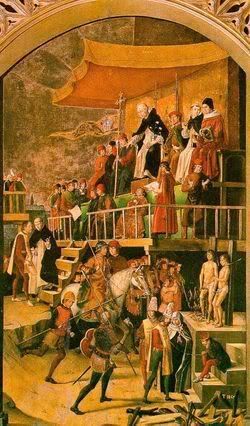
The words 'heresy' and 'heretic' may conjure up a sinister image for many, harking back to medieval times when there was much ado about such things. People willing to inflict injury, torture, and death, other folks willing to endure the same, all for the sake of some theological details. We tend to look disparagingly, or at least condescendingly, upon the primitive narrow-mindedness that would not esteem diversity of thought as we do today. Enlightened and educated, we now regard differences of opinion on such matters as a healthy thing, certainly not a cause for extreme reactions.

With that in mind, i recently looked into the etymology of the word 'heresy', and found that it was originally a quite innocuous term, even mundane. It comes directly from the Greek word αιρεσις (airesis or hairesis), which just means 'choice' or to 'choose' or 'select'. It's what the Greeks did at their market, and what you do at the mall or supermarket or video store. You pick and choose. You don't like that brand of peanut butter; you prefer this brand. That movie looks boring, but here's one that might be interesting. Certainly nothing evil or threatening in that. Choice is a good thing.

Well, i suppose it might be allowed that in some areas, a completely open-ended choosing might become problematic. We generally recognize, for instance, that in the military there needs to be a chain of command; it wouldn't work to have each individual soldier freely choosing what action to take. Likewise, in business, individual employees must sacrifice some autonomy and work to advance the collective success of the company, else the business will likely fail. Generally speaking, any human enterprise involving teamwork will necessarily also involve some curtailing of individual choice. Unity in religious faith is a special example of this. The bond of cohesiveness between believers assumes substantial agreement as to what beliefs they hold in common, else there is no bond.

But unity of faith goes beyond the teamwork priciple. The very pursuit of eternal truth presupposes that the truth is, in fact, attainable, and that other beliefs are therefore false and misleading. If truth exists at all, it must exist universally, and it must be singular. Pluralistic truth is an oxymoron. To speak of my truth is to speak of something that cannot be applied to others; i may as well speak of nothing at all. By contrast, the truth is worth speaking about, perhaps even arguing over.

The notion of pluralistic or relative truth carries with it the idea of the sovereignty of each individual self to decide what is and isn't true. So, besides being oxymoronic and intellectually untenable, this approach is essentially self-centered and arrogant, in that it vaunts the individual person's opinions above other considerations. Such intellectual myopia and self-centeredness would not seem to indicate a healthy faith. The more humble and honest approach would be to forget about pursuing my truth, and simply receive the truth as revealed and taught. Two examples:

The typical Evangelical proclaims the Bible to be the authoritative teacher of religious truth. But if that believer begins to 'pick and choose' which Scripture texts he will swear by, while ignoring, discounting, or explaining away the passages he doesn't like, that believer has ceased to be a true disciple and student of the Word, and has assumed the role of its critic and master instead.

In the same way, by claiming to be a Catholic, the Catholic believer implicitly accepts the Church as the authoritative teacher on matters of faith and morals. But if he freely selects which doctrines he will or will not hold, he is no longer a real Catholic. That is, his privately maintained beliefs cannot credibly be called 'catholic' or 'universal'.

So, to exercise airesis, to pick and choose what to believe, is incompatible with genuine faith. This is what the word heresy means.

And when you really think about it, these issues may be pretty important after all. Ideas do have consequences. What you believe will inevitably impact how you live your life, and will ultimately make our world either better or worse, depending upon whether your core values were good to start with. Those dusty theological details end up having enormous consequences.
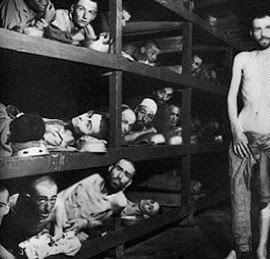
Consider this: The Holocaust didn't just happen spontaneously. Early last century, a certain Margaret Sanger (founder of Planned Parenthood), and others, began to develop ideas about a master human race, the elimination of 'human weeds' (inferior races), and the deliberate undermining of Church authority to bring this about. Many leaders in the Third Reich acknowledged the writings of Sanger as the philosophical platform upon which they built their programs. If a strong resistance to heresy had been in place at that time, these racist and genocidal ideas would likely have remained the private thoughts of a few miserable souls, and would never have been admitted into matters of German policy.

This brings us back to the original questions. Is a concern over truth vs. heresy a dangerous attitude? Or merely rigid and antiquated? Or is heresy itself more dangerous and potentially fatal? Might those medieval folks actually have something to teach us today? Is 'agreeing to disagree' an enlightened attitude? Or a deadly one? Or, perhaps, merely a lazy and apathetic one?