Showing posts with label contraception. Show all posts

Sunday, September 14, 2008

From nudge to tsunami

More idea refinement... The distinction between "grassroots nudges" and "cultural tsunami" is not a quantum leap, but a continuum. A single individual's beliefs and behavior can serve as a miniscule nudge to the culture as a whole. But individual joins with individual until the collective weight of several individuals in concert packs a much bigger punch. And, sometimes what begins as a tiny individual effort can gather momentum as others are moved, until the effect on the culture is quite significant.

Mike Koelzer I have recently become acquainted with a fine example of this very thing. In 2002, Grand Rapids pharmacist Mike Koelzer realized that dispensing artificial contraceptives was contrary to his Catholic faith, and started informing his customers that he would no longer be filling prescriptions for contraceptives. Though he received many angry responses, Koelzer stuck to principle, saying, "...I was and am willing to lose the business in order to not be a part of something I don't agree with."

That was six years ago. Whether inspired by Koelzer or impelled by their own individual convictions, more pro-life pharmacists have since followed Koelzer's example, and have stopped selling prescription or OTC contraceptives. So much so that the folks at Planned Parenthood are now 'very, very concerned' over this nationwide trend, and legislatures in at least three states have passed unjust laws intended to force such pharmacists to violate their consciences in this matter. The battle is engaged; a possible tsunami in the making.

ABC featured the above in a recent story, which you may view here (video) or here (printable text version). Koelzer is now a national speaker on these issues, and in 2007 founded ProLifePharmacy.com, where you may read more, and find links to other related sites.

In hindsight, I wonder: What was it like when nobody much was watching, when it was just Koelzer's tiny, insignificant, personal decision? I wonder whether Mr. Koelzer was tempted to cave in to his customers' ire, and return to business as usual. He might have reasoned that he was only injuring his business and his family by being so 'stubborn', and that little or no good was likely to come of it.

Or, what if Koelzer had been faithful, but nothing much did come of it? What if he had lost his business, seriously disrupted his family life, and no one ever acknowledged his principled stand? Would his principled 'nudge' still count? Would it count with God?

In this case, of course, the nudge has grown into a meaningful force. Nudges can grow into tsunamis. But maybe some nudges remain tiny, to all except God.

Friday, August 15, 2008

Credo ut intelligam

A fellow blogger has recently written at least two posts on the dangers of intellectual pride [1] [2] which has prompted a little introspection. But publishing one's thoughts is not a proof of pride, and so I blog on, hopeful that my love of truth is stronger than my ego, and herewith add my own two cents on the subject.

An example is worth many words. In this case, two examples, with a common theme, to illustrate both intellectual pride and intellectual humility.

Humanae Vitae After 40 years, it continues to become more painfully clear that Pope Paul VI's encyclical Humanae Vitae was indeed prophetic. The widespread acceptance of artificial contraception has led to legalized abortion, the breakdown of marriage, sexual license, and a host of other ills that currently plague our society, all of which were warned against by Paul VI. Moreover, both John-Paul II and Benedict XVI have reaffirmed the validity of this papal encyclical, and much harm has come from ignoring it.

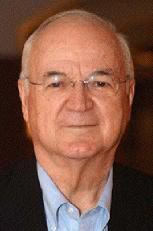
Fr. Richard McBrien In his July 21, 2008 column entitled "Humanae vitae: After Forty Years", Fr. Richard McBrien was pleased to quote Cardinal Basil Hume, Archbishop John Quinn, and Jesuit Richard McCormick. Much more extensively, McBrien quoted some of his own previous columns to emphasize that he himself was one of the first and most consistent questioners of Humanae Vitae. He is apparently pleased with his own "foresight" in countering the Church's teaching on contraception. Within one of these self-quotes, McBrien quotes Pope Paul VI as welcoming "the lively debate aroused by our encyclical". He did not quote John-Paul II or Benedict XVI. [3]

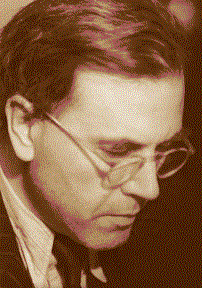
Dietrich von Hildebrand As a catechumen coming into the Catholic Church in the 1920's, a young Dietrich von Hildebrand likewise asked why birth control should be considered immoral. When told that he must accept the Church's teaching authority, he immediately replied, "Credo ut intelligam" - "I believe in order to understand." Such remarkable humility reflects a childlike faith, not in one's own insight, but in the Church. That, though composed of sinners and always in need of reform, she is God's holy ark of salvation, and can be trusted to teach the truth.

This young philosopher eventually became a modern doctor of the Church, noted especially for his brilliant contributions to doctrines on marriage and sexuality, and was among the first to defend Humanae Vitae in 1968. His widow Alice continues to speak and write on these themes today. Cardinal Joseph Ratzinger wrote of von Hildebrand:

I am personally convinced that, when, at some time in the future, the intellectual history of the Catholic Church in the twentieth century is written, the name of Dietrich von Hildebrand will be most prominent among the figures of our time.

This illustrates, I believe, the wonderful irony that intellectual humility is the door leading to true intellectual prowess, being unimpeded by the shackles and distortions of ego and error.


Note 3: Fr. McBrien's website does not permit me to link directly to the "Humanae vitae: After Forty Years" article, but you may go to richardmcbrien.com and navigate to it.

Sunday, July 13, 2008

Forty years

Forty years I endured that generation.
I said, "They are a people whose hearts go astray
  and they do not know my ways."
So I swore in my anger,
  "They shall not enter into my rest."
     - Ps. 95:10,11

As the Invitatory Psalm warns us every morning, God's patience is not limitless. O, we may find some temporary comfort in soft and flacid churchspeak. We may allow ourselves to be lulled by the gentle assurances of God's tender mercy, no matter what we do. But deep down, we kinda know it ain't so soft. We know that presumption is a huge error, and that there comes a time when God says "Enough!". God gives us time to repent. That, in fact, is precisely what time is for - that we may repent. But time ain't forever. How much time does God give us? That is the question.

Humanae Vitae July 25, 2008 marks the 40th anniversary of the papal encyclical, Humanae Vitae. Now, I won't insist upon a literal understanding of the term "forty years", but somehow, sooner or later, something's got to give. Through the prophetic charism given him, Pope Paul VI warned us in 1968 of what would follow if we accepted the practice of artificial contraception. He warned of widespread abortion, of the coarsening of society, of the breakdown of marriage, of rampant sexual licentiousness, of the victimizing of women as objects. And for forty years, Humanae Vitae has been ignored and even openly opposed - not just by atheists nor even by Protestants, but by Catholics, by priests and bishops and good Catholic couples. And so, because we have chosen to ignore the warnings, they have tragically come to pass. And still we do not heed.

How long, O Lord?

O, by the way, the 40th anniversary of Roe v. Wade is just 4½ years away.


Related posts:
Roots of abortion
Contraception connection
Contraception connection - 2
War Against Population
Population control (or - David's sin)
Thanatos antidote - 2

Tuesday, December 11, 2007

Unoriginal sin

The first sin of man was eating the forbidden fruit of the tree of knowledge of good and evil. Original sin enters in when man decides to make up his own definition of what is good and what is evil.

What might the final sin look like, the un-original sin? This is pure speculation on my part, but there seems to be some hint in Scripture...

The very first command given by God to man is to "Be fruitful and multiply..." (Gen. 1:28 RSV) With rare exceptions, this command has been obeyed throughout human history, even by pagans and heathens. Indeed, fruitfulness has been considered a blessing, and sterility a shame in virtually every culture - until recent times.

Jesus, carrying his cross, spoke his final prophecy, "For behold, the days are coming when they will say, 'Blessed are the barren, and the wombs that never bore, and the breasts that never gave suck!'" (Luke 23:29 RSV) Those words must have seemed incredible to his hearers. Yet here we are.

The spurning of the first command, and the fulfillment of the final prophecy. Sounds rather apocalyptic.

Friday, December 7, 2007

Crisis of authority

A summary of the past 6 posts would go something like this: The shallow selfishness of consumerism and the myth of overpopulation has led to an irrational fear of human propagation, and to a widespread acceptance of artificial contraception. The acceptance of contraception has in turn led to an ideological divorce between sex and procreation. This divorce then leads inevitably to the acceptance and even approval of abortion, fornication, adultery, pornography, and homosexual practice. It's quite logical: If sex is primarily about the father-mother-child thing, the family thing, then traditional mores make lots of sense. But if it's just intimate pleasure between two partners, these various aberrations are no big deal.

There seems to be one more piece to this puzzle, another fundamental cause for the widespread acceptance of contraception and of all that follows. That piece would be a crisis of authority and of obedience to authority. In fact, if our culture manages to survive into the future, I believe future historians will name the crisis of authority as one of the defining elements of our time.

A happy, groovy hippy I was a teenager in 1968 when post-Vatican II changes were sweeping through the Catholic Church. Those were the heady days of great social upheaval; of hippies, free love, and the questioning of authority. Some priests of my acquaintance - hip and relevant and groovy - were confident, and assured us lay folks, that the Church would soon get with it and relax most or all of her sexual hangups. When Pope Paul VI issued Humanae Vitae, and it wasn't what we were expecting, and did not seem relevant (true prophecies are rarely recognized at first), the cold reception it received was to be expected, given the milieu. Yet this was unprecedented, and has proven to be tragic.

Many priests and a few bishops openly repudiated both the new encyclical and the Church's long-standing condemnation of contraception. Other priests and bishops were simply silent, neither openly rejecting nor openly applauding the Pope's teaching. Only a few were vocal in their support. I have no credentials as an historian to say this was absolutely unprecedented, but can report that, even as a progressive-minded young man, I was surprised at this change of posture. For a reigning Pontiff to be thus ignored and even rebuffed was something I had never heard of.

This crisis extends beyond the Catholic Church. Lines of authority within the family are now typically pooh-poohed as well. Patriarchy is summarily dismissed as outmoded and irrelevant, and the father's authority in the home is questioned along with the bishop's and Pope's in the Church. I suppose this revolution took many decades, but the late 1960's have seemed to be the watershed moment.

But notice where authority is still esteemed - in the military, and in our places of business. Occasional exceptions aside, the chain of command in these settings is still clearly defined and adhered to. Heraldic Coat-of-Arms of Pope Paul VI The corporate equivalent of a Fr. Richard McBrien would be quickly shown to the door. Perhaps the difference is: We need our businesses and our military to succeed; failure is unacceptable. But the health and success of the Church, or the family? (yawn) Who cares?

In 20-20 hindsight, it should now be obvious that Pope Paul VI was right. The dissidents were wrong then, and are wrong still. Even more fundamentally, rebellion against legitimate authority is both immature and arrogant. Rebellion against divinely ordained authority within the Church and the family is sinful, and is tantamount to rebellion against God. The 60's mentality - question traditional morality, question the status quo, question authority - seemed cool and relevant at the time, but has turned out to be merely stupid and selfish and short-sighted. Question one more thing, all you old hippies - question the questions!

Friday, November 30, 2007

Thanatos antidote - 2

The previous 5 posts have comprised a thread, a progression of related thoughts. The link between contraception, abortion, population control, and the irrational fear of human procreation has been pointed out by minds much greater than mine. Pope Paul VI, for example, in his 1968 encyclical Humanae Vitae, prophetically foretold the dire consequences that would result from an easy acceptance of contraception and the cheapening of human sexuality. Or, take the terse profundity of JP II's phrase 'Culture of Death'. Or, as reported a couple posts ago, Jacqueline Kasun's massively researched work. I would only like to add these additional thoughts:

I ended the last post by asking if the clamor for population control were driven by pride, or hatred of God's sovereignty, or by fear of an imminent calamity which population stresses may threaten. If you who read this are in favor of population control, and if that conviction is driven by pride or hatred, then I have nothing more to say to you (but, beware - God may have a word or two with you one day, and more than mere words!)

But if imminent calamity is what concerns you, consider this little thought: People per se don't stress the biosphere; wasteful consumption of resources and reckless production of toxic wastes do. And then consider this: It lies within the human genius to find better alternatives to waste and toxicity. People are the solution, not the problem. We have no inherent need to waste or to poison; the 'ism' in the word indicates that 'consumerism' is a belief system. And belief systems are voluntary; they can be changed.

Allow your belief system (and behavior) to be changed. Be converted. Do not accept the 'consumer' moniker (as if you were nothing more than a complex alimentary canal). You are much more than a consumer; you are a person. You have an eternal destiny. You are much more than an alimentary canal; you have a brain with which to think, a body with which to do productive work, a heart with which to love, and a spirit with which to worship and trust in God. Employ all of that, your entire being, in creative and productive ways, and cease to accept the degrading label of 'consumer'.

Start with something modest. Walk to work or to church instead of driving. Plant a garden. It lies within you to do good, rather than wring your hands over evil. Be on the lookout for little ways to shake off the shameful moniker. And don't expect the government to do anything remotely useful in this regard. Those folks live within their own little institutions; most of them couldn't think their way out of a paper sack if you pointed them toward the open end. Goodness, they seem to think that outlawing light bulbs and fireplaces is the way to go. So, don't wait for bureaucrats; do it yourself, start now. The same applies to you bureaucrats; rather than institute more and more heavy-handed programs and restrictions for other folks, shake the cobwebs from your skull, and do something good yourself. Let's improve the world, one person at a time. Above all, just know that you need not be a consumer, but a free and beneficial person, created in the image of God.

Monday, November 26, 2007

Population control (or - David's sin)

The 21st chapter of 1 Chronicles tells the intriguing story of King David's worst sin. Judging from the punishment it drew, this crime was, in God's eyes, even more serious than the Bathsheba/Uriah incident. The sin? David took a census of the people.

Huh?

What made this such a travesty was that it was an act of immense pride on King David's part. Not just the pride of a self-inflated ego, but of usurping Divine sovereignty and province. In taking a census, David was arrogating to himself an authority that belongs to God alone, an authority over human life.

From the beginning, God has given to man dominion and authority over all other life on this Earth - over all the animals and plants. This authority is explicitly given in two places: to Adam & Eve in Gen. 1:26-30, and again to Noah after the flood in Gen. 9:1-3. Two things are noteworthy here. Both passages include the command to "be fruitful and multiply", and neither passage grants man authority over himself.

Human life belongs exclusively to God. Murder is a crime against a human victim. But even more, it involves a sin against God's sovereign authority over the victim's human life. Suicide is a similar sin, since no man owns his own life; it belongs by right to God alone. And so the crime of population control is likewise a sin of unmitigated arrogance, of assuming control over human life itself.

Two posts ago, I asked who or what ought to be controlling human population. Individual families? Governments? A world government? A population control agency? The answer, from the above, is: God alone.

Which leads to one more question. Why do Bill Gates and Warren Buffett and Planned Parenthood and UNFPA and other rich and powerful folks clamor for world population control measures? Is it pride? Is it hatred of God and of His sovereign claims? Is it fear of some calamity resulting some day, somehow, from (gasp!) Too Many People? Is it, perhaps, fear or loathing of the people themselves, and of demographic threats to their affluence?

Tuesday, November 20, 2007

War Against Population

A host of issues such as poverty, hunger, AIDS, and Global Warming have been attributed by many to the general ill effects of overpopulation. But when the particulars are looked at case by case, no causal connection can be shown. Consider a certain famine, and you find its primary cause is a civil or regional war. Examine an epidemic, and you find that it resulted from widespread sexual promiscuity. Another devastating crisis is seen to come via a combination of political greed, incompetent management, and uncontrollable natural forces. Show me, if you can, a specific, serious human problem that was demonstrably caused by Too Many People. To date, I haven't seen a single instance.

Is there something in the human psyche that demands simplistic answers? ("If we can just solve the overpopulation problem, everything will be OK.") Or do we find dark delight in news of impending doom? Or a secret self-loathing, that readily embraces the notion that we ourselves are the biggest problem? I have already discussed what I refer to as this self-loathing "Thanatos" phenomenon, and have suggested a possible antidote as well.

A more sinister explanation to consider is that some people are deliberately beating the overpopulation drum to further their own agenda. One extremely well-researched book that explores this possibility is Dr. Jacqueline Kasun's 1988 (later updated) book, The War Against Population. Read this online book review for more info, or, better yet, get the book and read it yourself. This is not some nutty 'conspiracy theory' work. It is well documented in showing that some very powerful elitists view population control as a key to their political and material interests. To really control people (and their stuff), control their numbers. One well-exposed example is the Nixon Administration's 1974 National Security Council Memorandum 200 (NSSM 200), a.k.a. the "Kissinger Report", and subtitled "Implications of Worldwide Population Growth For U.S. Security and Overseas Interests". Consider just this one citation among many from NSSM 200:

Whatever may be done to guard against interruptions of supply and to develop domestic alternatives, the U.S. economy will require large and increasing amounts of minerals from abroad, especially from less developed countries [See National Commission on Materials Policy, Towards a National Materials Policy: Basic Data and Issues, April 1972]. That fact gives the U.S. enhanced interest in the political, economic, and social stability of the supplying countries. Wherever a lessening of population pressures through reduced birth rates can increase the prospects for such stability, population policy becomes relevant to resource supplies and to the economic interests of the United States. (NSSM 200, CHAPTER III - MINERALS AND FUEL)

Population control advocates have nearly always been members of rich, industrialized nations. Do they fear the demographic advancement of poor nations? Typically, they are also kindly disposed toward Planned Parenthood (obviously), and antagonistic toward Christianity (especially Catholicism). On a personal note, when I began to recognize that there might be ulterior motives at work, I finally started questioning the scientific neutrality of many population studies. Dr. Kasun's book helped me to sharpen these questions.

In addition to exposing an anti-population agenda, Dr. Kasun presents a formidable quantity of evidence to debunk the myth - and groundless fear - that we humans are too many in number, or anywhere near too many. Do you find this important? If so, you may want to read her book, or get more general information from The Population Research Institute.

Wednesday, November 14, 2007

Contraception connection - 2

OK - contraception is the root of abortion, promiscuity, divorce, homesexuality, and a bunch of other ills. Let us proceed one step further and ask: what is the root cause for the contraception mentality?

One thing seems obvious: the root of contraception is not human nature, or nature in general. The most basic rule of Mother Nature, the most primal drive in all living things, the fundamental nature of every biological being, is procreation. Making allowance for occasional oddities and pathologies in individuals and small groups, any culture-wide trend away from procreation must be seen as a trend away from biological nature. It is for a good reason that those parts of the body are collectively called the reproductive system (duh!) - contraception just ain't natural.

lemming But, might there be some natural process that, in the right circumstances, works against the general rules of nature? The periodic self-destructive behavior of lemmings comes to mind. These small rodents, apparently driven by population pressures, instinctively strike out on a search for fresh living space, always transversing any rivers and lakes that block their downhill course, until they perish in great numbers by drowning in the ocean. Well, that's only partially true, and partially mythical. In response to high population density, some lemmings do migrate, and may swim across bodies of water seeking new habitat. But mass suicide is not their game. Like other living things, lemmings generally try to keep on living. (Read more here.)

By way of rough analogy, we seem, consciously or subconsciously, to be driven by perceived population pressures, by the conviction (and fear) that our numbers are too great. Even if not entirely natural, there is a certain logic in what follows. If we humans have procreated too much for our own good and the good of our fragile earth, then contraception may be seen as a good thing, and abortion as a repugnant but necessary fall-back procedure, and homosexual activity as benign and perhaps even noble, since it dissipates sexual energy with no threat of adding to the crisis. Those who have moral reservations about such practices may nonetheless have a vague anxiety and uneasiness about human population growth, which tends to quell their opposition to the moral disarray.

The sixty-four dollar question, the question which demands to be openly addressed, is this: Are human population levels really out of whack? Are we really too many in number? Or is over-population merely a deeply entrenched myth, with no factual basis?

There may be another question as well. If human population is out of control, then who or what ought to be controlling it? Individual families? Governments? A world government? A population control agency? But, first things first. First, the sixty-four dollar question...

(To be continued.)

Friday, November 9, 2007

Contraception connection

When a society accepts and approves of contraception, it thereby accepts and approves of divorcing the act of procreation from the responsibilities and duties of parenthood. This casual treatment of human sexuality leads to acceptance of abortion, and to a wide range of other things as well.

When sex loses its power to transmit life, it becomes just a fun and casual pasttime. Inhibitions and sanctions against sexual adventurism break down. The illusion of freedom from weighty ramifications lead more and more people to indulge in promiscuity, adultery, etc. When sex loses its power to transmit life, the unique rights and responsibilities of the married state are forgotten. Divorce becomes common, and confusion grows as to what marriage is all about.

If marriage is not about transmitting life, if it is just a contract between two adults, then who's to say those two adults must be of opposite sex? Who's to say it must be limited to two? Who's to say it must be limited to adults? Who's to say it must be limited to humans? What is thought ridiculous today may be seriously considered and adopted at some future point, if marriage is not about the transmission of life.

Contraception is the root of abortion. It appears to be the root of much else that afflicts our troubled culture.

Monday, November 5, 2007

Roots of abortion

The crime and the tragedy of abortion doesn't begin when the young mother walks through the doors of the abortion clinic. It starts when that young woman is taught erroneous things about her nature, and when the young man is likewise led to believe lies about human life in general, and his own in particular. It starts when Planned Parenthood is invited into the classroom to fill impressionable minds with deceptions about the nature of human sexuality. That sex is all about having fun, that there is no connection between sex and adult responsibility, that the duties of parenthood can be divorced from the act of procreation. That there are a plenitude of pills and devices to secure such a divorce. That, when these fail, there is always the neighborhood clinic to take care of the little problem.

Of course, Planned Parenthood is happy to provide all of these 'services', enriching its coffers with every abortion performed and every purchase of pills and condoms. The consequences are broken lives, loss of family stability, and a general moral rot throughout society. Not to mention the slaughter of the innocents. Yet the travesty continues unabated.

Why so little outrage? Why do so few cry, even fewer protest, and even fewer try to fight the evil? So few Christians will even bother to cast their vote accordingly. Is the act of voting pro-life so very difficult and inconvenient? Or might there be some deeper reason? Does abortion have an even earlier beginning?

One credible suggestion is that societal acceptance of abortion really begins with its acceptance of contraception. This is the Planned Parenthood creed, and fundamental fallacy - that sex and procreation can and should be divorced. Accept this notion, and casual sex follows. Then abortion.

As every gardener knows, it does little or no good to nip a weed's leaves. You've got to get the thing out by its roots. Until pro-lifers recognize and confront its contraceptive roots, Planned Parenthood and the abortion juggernaut will be intractable.

Thursday, April 5, 2007

Alternate religions

Man is a religious animal. No amount of debate or theorizing or psychological manipulation can change that. It is an indelible part of human nature, just as much as language, music, humor, and apposable thumbs. The illusion of atheism is just that: an illusion. It isn't a question of whether or not you are religious; it is merely a question of whether or not you will worship God, or whether you will make for yourself some other god, an idol.

From the very beginning, man has been torn between the humble desire to worship his Creator, and the proud desire to exalt himself instead. But man has never succeeded in 'turning off' his religious inclinations. If he doesn't worship God, he will find a lesser idol. If he doesn't follow a true religion, he will make one up.

Many folks might object to this assertion, citing religion as hypocritical. Indeed, the infamy of religious hypocrisy is commonplace, so familiar and well recognized as to be hackneyed. There is the stereotypical Baptist preaching loudly against sexual immorality while carrying on an adulterous affair. The celibate Catholic priest found guilty of child molestation. And let's not forget the medieval selling of indulgences, the practice of simony, etc, etc.

Yet these examples serve to illustrate even more clearly the original assertion. Think about it. Even when he fails to live by the demands of his religion, man must believe. Rather than break off believing, he makes excuses for his behavior, at least to himself. Others see through his excuses, and rightfully call it hypocrisy. The very cry of 'hypocrite!' presumes that something genuine has been corrupted. Were religion not such a deeply seated part of our human nature, we would not object so strenuously to its misuse.

Substitutes for God - idols - come in many forms. Some people worship money, dedicating themselves religiously to its procurement and enjoyment. Some worship fame or prestige. Some politicians have literally sold their souls in the pursuit of political power and influence. Certain environmentalists worship Mother Earth as their goddess. The list goes on and on.

This last example has special significance for me, personally. I have spent the past 40 years or so maintaining a fairly keen focus on issues of conservation and environmental concerns. Only recently have i come to see that, for many, these concerns have taken on the characteristics of religious fervor. The pursuit of environmental quality based upon empirical data is replaced by a dogmatic and evangelistic zeal, demanding conversion and radical adherence to a sort of Gospel of Ecology.

One public figure has been on a world-wide tour engaging in what can only be called evangelizing or preaching. His sermons are emotion-laden pleas for repentance, on moral grounds, of the sin of producing greenhouse gases. Nor is religious hypocrisy lacking here. The same public figure, willing neither to reform his own grossly consumerist lifestyle nor to abandon his religious environmental fervor, makes excuses for himself in the form of 'carbon offset credits'. Others see through this hypocrisy, while he and many of his co-religionists apparently do not.

There are grave spiritual dangers inherent in weaving a new religion out of global warming alarmism. Idol worship and false religions always end up degrading and destroying their adherents. (Besides that, in the long run rigid dogmatism could well erode the credibility of true research on the subject of global warming, and thus counter-productively retard reasonable corrective measures.)

As much as fanatical environmental alarmism interests and troubles me, there is another wave of alternate religions that is much more pernicious. Various sects within this religious trend - denominations, if you will - advance different emphases. There is first of all the creed of Feminism, with legal abortion as its main sacrament, and artificial contraception as its minor one. That this is a religious sect is clearly seen by the howls of protest and righteous indignation that arise whenever these sacraments are threatened or challenged in any way. According to the creed of Feminism, patriarchy is seen as the Original Sin, and, accordingly, marriage and the traditional family are abhorred.

Then there is the Population Control sect, which accepts the same two sacraments, but offers its own version of Original Sin. Namely, these believers would trace virtually every social and environmental ill back to the cardinal sin of human propagation. The Gay Rights religion, with its built-in rejection of propagation, meshes well with these two, while adding its own emphases on hedonistic pleasure and redefining human sexuality.

There is, of course, much common ground between these different denominations. They all focus on a revamping of human sexuality, morality, and propagation. There is general agreement among them over the virtues of legalized abortion and of the condom. There is in all of them a strict dogmatism and evangelistic fervor that can only be characterized as religious. With some exceptions, neither they nor outsiders may think of these folks as being religious in the usual sense, but they most assuredly are. Indeed, as asserted above, we are all religious, in one way or another.

Here's my point: At the very center of your being is an exalted spot, a place esteemed above all others, a throne, as it were. The question is: Who, or what, sits upon your 'throne'? Do you bow before some other human? Is your pet ideology your all-consuming desire? Do you worship yourself? Or does God sit upon this throne?

The person who refuses or neglects to believe in and worship God is likely to believe in and devote himself to almost anything else.