Saturday, May 19, 2007

Roundtable

Catholic publications: Embrace diversity of thought, or teach Catholic truth clearly?

Lenore and I recently wrote the following letter to our diocesan newspaper, the Catholic Herald of Superior, WI. The letter was printed in the May 3 edition:

In this information age, we can easily experience information overload. TV, Internet, books, all combine to create a cacophony of ideas and opinions on every subject imaginable. This may be quite suitable for political and ideological controversies, but the truth of our Catholic Faith must surely rise above such mere subjectiveness and speculation. The highest purpose of Catholic journalism must be seen in this light: to shine the light of the true Faith as a sure beacon and reliable guide in the midst of the chaotic and confusing cacophony in our world.

By publishing the left-leaning and often heretical ideas of Fr. Richard McBrien and Fr. Ron Rolheiser, the Catholic Herald is failing to achieve this high calling. Weighing their own supposed academic prowess and subjective opinions against 2000 years of consistent Church teaching and billions of believing saints, these two priests have no problem preferring the former. But such insufferable hubris is not the primary problem. To give these two a podium is to undermine one's own reliability as a source of Catholic teaching. Such has been the Catholic Herald's error.

Surely more authentically Catholic writers can be found -- writers such as Matt C. Abbott, Amy Welborn, or Russell Shaw, to name a few -- who have consistently written intelligent reflections on our Faith without departing from its truth. We call upon the Herald to replace McBrien and Rolheiser with real Catholics. Enough cacophony!

The May 17 edition contained 6 response letters, all of them opposed to ours, although we also received many favorable responses in person. Regretfully, The Herald does not include letters to the editor in its online version, so links to the written responses cannot be included here.

In light of the interest shown, this blog post is an invitation to engage in a roundtable discussion on the proper role of Catholic publications in the marketplace of ideas. Feel free to click here or on the comment link for this post (below) to read the roundtable discussion, and to add any comment you like. No comments will be edited or deleted unless they are obscene or exceedingly uncivil. The first comment is our letter as sent to The Herald in response to the 6 unfavorable responses.

Thursday, May 17, 2007

World Congress of Families

World congress of Families logo This just in from C-Fam, (a Catholic presence at the U.N.): The World Congress of Families in Warsaw, Poland successfully concluded this past Sunday. Among other items, I found this part of their report especially interesting:

U.S. Assistant Secretary of State Ellen Sauerbrey touched on one of the more controversial debates in international law, and one in which the U.S. and Europeans have diverged during debates at the UN. She affirmed the position found in foundational human rights documents, including the Universal Declaration of Human Rights, which declares that the family is legally above the state. More recent human rights treaties such as the Convention on the Elimination of All Forms of Discrimination Against Women (CEDAW) have been used to argue that the family is just one of many institutions and does not deserve special protections by the state. Sauerbrey noted that "more than 2000 years ago Cicero spoke of the family as 'the seedbed' of the state. The state did not create the family; rather, families created the state."

A ray of hope, and Poland is truly a bright spot in the E.U.

Read the full text of the C-Fam statement, and visit the World Congress site for more info.

Tuesday, May 8, 2007

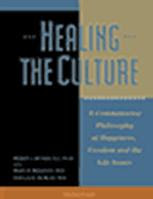
Healing the Culture: A book review

If you want to buy Healing the Culture, try this Life Principles link. You can also order it through ignatius.com, or call 1-800-651-1531.

The faculty of reason should be seen as the common denominator uniting people of various beliefs and persuasions. As rational beings, we have an obligation to use the discipline of logic and reason in addressing human difficulties and controversies.

Healing the Culture, by Robert J. Spitzer, S.J., Ph.D., qualifies as a work of reason. Spitzer employs a step-by-step common sense approach to construct a framework of timeless and universal principles, and applies those principles to current cultural crises, namely, abortion and euthanasia. While disputes over these two issues are typified on both sides by political posturing, anecdotal arguments, and emotional pleas, Spitzer's reasoned and methodical approach is both refreshing and extremely important. It is an example of good philosophy that is practical, rational, and engaging.

The book: Healing the Culture Spitzer begins by defining four levels of happiness. The first level is characterized by immediate gratification, of maximizing pleasure and minimizing pain. The second level is typified by the comparison mentality, of achieving competitive advantage and bolstering one's ego. The third level goes beyond self, toward seeking the good of others. The fourth and highest level of happiness is derived from giving and receiving ultimate or transcendant goodness -- Truth, Love, Justice, Beauty. These four levels move from the immediate to the enduring, from the shallow to the profound.

Next, Spitzer draws connections between one's view of happiness and one's view of other principles: success, self-worth, love, suffering, ethics, freedom, personhood, rights, and the common good. He treats each of these in depth, but perhaps personhood, when looking at abortion and euthanasia, is the critical point. Using rigorous logic, Spitzer concludes, quite reasonably, that every being of human origin should be considered a person, as I have noted in my previous post entitled "Persons". It is important to note that Spitzer does all this in a way that even an unbeliever would find compelling, providing that said unbeliever is honest, willing to think, and is a person of basic good will. It is also important to note the legal and cultural ramifications of these simple but profound ideas.

Pope John-Paul II repeatedly called upon Christians to build a 'culture of life'. Benedict XVI has emphasized the importance of using reason in our dealings with the culture. In my opinion, Healing the Culture fulfills both of these mandates, and is well worth reading, digesting, and sharing.

Monday, April 30, 2007

Why do i write 'i'?

As a general rule, i try to write using standard textbook English. So i use the male pronouns he, him or his rather than the inclusive but clumsy he/she, him/her, his/her, and the standard 'man' rather than 'humankind'. Moreover, i try to construct my sentences in a fairly standard manner, keeping in mind, for example, that a preposition is not a proper word type to end a sentence with. And that it's usually bad form to start a sentence with a conjunction. I likewise do my best to never split an infinitive. Not that i don't occasionally slip up inadvertently, but you get the idea.

But i have deliberately broken one rule of standard English, namely, spelling the word 'i' without capitalizing it (except when it begins a sentence). Why? I'll tell you why:

The better question would be why would i capitalize the nominative case of the first person singular pronoun? I don't capitalize other pronouns like 'me' 'we' 'she' 'you' 'they', etc. It's not a proper name. Other languages don't capitalize its equivalent ('yo' in Spanish, 'io' in Italian, etc.). Why does written English single this pronoun out as something special? Do we have a collective tendency toward narcissism? Might this subconsciously be the root cause for the Me generation complex? You might say that the unorthodox uncapitalized form not only makes more sense, but is a small attempt to de-emphasize self, to deliberately counter the 'me first' tendency implied by standard English.

The idea was first proposed to me by the folks at Miles Jesu, a small and humble lay religious order personally known to me in Chicago. In all their writings, they employed the lower case 'i', for pretty much the same reasons as i have just offered. (See this article, for one example.)

But now i see that, in their recent writings, these people have reverted to standard English. (See this article, for a more recent example.) I don't see an explanation for this, but i can guess that their reasons for reverting might go something like this:

The unorthodox approach may be well-intended, but mostly ineffective, and even more of a distraction than anything else. Words are meant to convey a meaning, and if the words draw attention to themselves by such non-standard usage, they lose their effectiveness. It could even be argued that such unorthodox writing style draws undue attention to the writer, an ironic defeat of the original intent to diminish self!

So, after giving this some thought, i think i'm ready for a personal compromise. I still reserve the right to spell the word 'i' as lower case in my personal notes and correspondence, but starting right now, I will revert to standard upper-case in my published writings, for the sake of clarity. This little crusade was fun, but rather pointless, if you know what I mean. The I's have it.

Sunday, April 15, 2007

Homosexuality and same-sex marriage

We think that the sins we hug tight are ourselves, but we are wrong. They weigh us down, they deform us, they obstruct our sight.
  -Anthony Esolen

Having mentioned it in a few previous posts, this post is my endeavor to focus on the subject of homosexuality and same-sex marriage...

Tolerance

Tolerance is commonly invoked as an argument for legalizing or sanctioning same-sex marriage. Namely, that the mainstream majority heterosexual world must learn to accept people who are different, and not fear or hate homosexual individuals.

I have no problem with this sentiment as far as it goes. Certainly we should neither fear nor hate any other individual or group of people. But accepting people does not mean accepting all behavior without question. Tolerance, as i have argued in a previous post, does not necessarily entail the abandonment of behavioral standards.

Justice and equity

Another major premise is that allowing same-sex marriage is simply a matter of fairness and equity, that it is unjust to withold this basic human right from a group of people who just happen to have a different approach to sexuality.

The problem here is with an illogical view of marriage as a 'right', defined by human society. The unspoken assumption is that by altering the definition of marriage, we can change what it is. But true definitions don't work that way. Human rights, at least the important, inalienable ones, are natural rights, determined by nature. That's what makes them inalienable and universal. Likewise the real definition of marriage is not subject to arbitrary change. It is what it is. (See natural law argument below.)

If marriage could be redefined to include same-sex couples, then it could also be redefined to include triples or any number of individuals. (This idea is already being pursued.) It could also be redefined to include non-human partners - someone who wants to marry his dog (or goat?). Once you start claiming the ability to redefine such things, the sky's the limit. Lest you be tempted to dismiss this as reductio ad absurdum, remember that, not many years ago, same-sex marriage would have been considered an absurdity.

Science

Some assert that, since science has proven homosexuality to be biologically determined, it must be recognized as purely natural and on a par with heterosexual behavior.

Scientific theories come and they go. There have been some studies seeming to show a genetic basis for homosexuality, while others dispute that claim. The principle of natural selection demands that, for a 'gay gene' theory to hold up, a pleiotropic argument would have to be advanced as well. That is, there would have to be a corresponding genetic benefit to offset the obvious biological handicap of the homosexual trait. To date, there seems to be no hint of evidence for such a beneficial pleiotropy. (See this article for further articulation of this and other points.) Other theories currently being advanced point to either developmental causes or non-genetic organic (chemical or microbiotic) causes. While far from certain, this general tack seems to be more plausible than the fading 'gay gene' theory.

This is all interesting, but not terribly germane. The debate over what underlies homosexual tendencies can never address the nature of marriage, or its heterosexual essence. Neither can science ever really address the rightness or wrongness of human behavior. I suppose that moral theology and legal jurisprudence may both draw from the well of scientific knowledge, but science itself must be concerned only with empirical observation, and be silent on matters of judgment, else it ceases to be science and becomes ideology instead. (See my Epistemology post.)

Consider: There may well be organic or genetic factors that dispose some individuals to alcoholism. Would this make the consumption of alcohol into a human right? (Ask a highway cop that hypothetical question.) In the same way, the question of whether homosexual behavior is chosen or biologically determined is an interesting question, but it has no real bearing upon whether the behavior should be sanctioned.

Scripture

Due to man's inherent religious instinct, many have attempted to justify homosexual behavior on Scriptural grounds.

This invariably involves 'discovering' the sin of Sodom (Gen. 13:13, 19:4-11) to be inhospitality rather than homosexual rapaciousness. Further, stringent Mosaic laws (Lev. 18:22, 20:13, Deut. 23:17) against homosexual relations are facilely dismissed as outmoded and irrelevant. In the New Testament (Rom. 1:26,27, 1 Cor. 6:9, 1 Tim. 1:10), the Apostle Paul is condescendingly stereotyped as a homophobe, or as an unthinking product of the narrow culture of his day. (Of course, the moderns making this charge are not shaped by their own cultural biases!) And, most wonderfully, Jesus' lack of explicit mention of the subject is taken to mean that He endorses homosexuality.

This 'explaining away' of relevant texts is a classic example of Scriptural eisegesis, the reading into Scripture to attain a predetermined interpretation. Moreover, it betrays an attitude of hostility or at least condescension toward the Bible. Rather than docilely receiving Scriptural truth as a disciple should, such eisegesis involves a rather arrogant critiquing of Scripture, judging the Word of God instead of allowing oneself to be judged.

Rather than turn this blog post into a lengthy Bible study, i would invite anyone interested to search the Scriptures for yourself. If you avoid the heroic intellectual gymnastics described above, and stick to an honest exegesis, letting the Bible teach you, i think it will be obvious enough that every Bible passage that speaks of homosexual activity, in both Old and New Testaments, clearly treats it as sinful.

Love

Following from the above misunderstandings, many assert that Christian love demands the acceptance of same-sex relations as being normal and good.

But true love isn't characterized by a bland approval of everything. This would not be love, but complacency. Christian love flows from love of God, and from a desire to obey and honor God in all things. The Christian is commanded to love the sinner but hate the sin. To do less is actually a failure to love as Jesus commands us to. (Ref: the opening quote above.)

Jesus loves the sinner, and then calls the sinner to repentance and to holiness. That's what real Christian love looks like.

Defense against aggression

Homosexuals are often portrayed as a persecuted minority unjustly attacked and oppressed by the powerful majority. This may be the silliest argument of all.

With very few exceptions, the popular movement to resist same-sex marriage is just that - a resistance movement. The proactive aggression is clearly coming from the militant gay culture, seeking to overthrow centuries-old social and legal norms. The counter-movement seeks to protect the institution of marriage and the family from such undue and destructive aggression.

The arguments for tradition

Although the pro-family counter-movement is mainly a resistance and a reaction to militant homosexual advocacy, it also involves several of its own proactive and fundamental points:

Marriage as foundational

Briefly, this argument is for recognition of marriage as the very foundation of civilization. The sanctioning of heterosexual monogamous marriage advances the domestication of men, the protection of women, and the rearing of children in stable environments. It provides men with the means of knowing their children and thus the motivation to provide for them. It allows men to become co-workers with other men instead of rivals. In other words, marriage makes civilization possible. This is not to claim that civilization has perfectly achieved these benefits. It is to say that marriage is the means of achieving them. Other types of social arrangements cannot advance these same essential principles.

Therefore, to the extent that a society embraces and is founded upon marriage with all its rights and responsibilities, it will be civilized. To the extent that it eschews these principles, it will cease to be civilized. Do not imagine that man became civilized and then decided to 'invent' marriage. You could even say it was the other way around: Marriage 'invented' civilization.

From this simple point it can be seen that any redefinition of marriage would detract from these foundational principles. This would be, in effect, to move away from civilization and toward savagery.

Natural law

Closely associated with natural rights (life, liberty, etc.), natural law is law which is determined by nature, and so is valid even in the absence of statutory law or positive law.

So, natural law regarding marriage derives from the essential nature of marriage. In its very nature, marriage can only be the pairing of a man and a woman. The complementarity, mutual dependency, and potential fecundity of this arrangement are of the essence, and objectively so, not subject to arbitrary interpretation. (I also explored this thought further in a previous post.)

Common law

What nature is to natural law, history is to common law. The plain fact is that for centuries upon centuries human societies and their governments have recognized marriage as being between a man and a woman. The long-standing precedent is an important argument in its own right.

Some have disingenuously argued that, just as the long-standing institution of slavery was abolished, so should the common law precedent of monogamous heterosexual marriage be revisited. But for a long-standing law to be overthrown, it should first be proven to be flawed.

The American institution of slavery, only a couple of centuries old, was clearly flawed, and so its demise was just and right. Roe v. Wade, now 30+ years old, is also flawed. The common law institution of heterosexual marriage, millenia old, is not flawed. (In fact, as argued above, it can be seen as the foundation of civilization, and thus preceding all other legal precedents.)

Love and tolerance

As noted above (and here), the Christian concept of love goes way beyond mere passive acceptance, to the much more compassionate offer of repentance and forgiveness.

It is very honest and loving to agree with God that homosexuality is a problem, not a gift. Having homosexual tendencies and temptations is not in itself sinful. Exercising one's free will to engage in homosexual acts is sinful. But it doesn't end there; there is remedy in God's grace.

Repentance and forgiveness

There is first of all the remedy of forgiveness for sin. That is what Jesus died on the cross for, so that sinners could be forgiven. He didn't die so that we could excuse ourselves, or identify ourselves with our sin, but so that we could reject sin and be forgiven. This necessarily involves repentance - agreeing with God that our sins are evil, and that we should try to avoid doing them. The good news for all of us is that Jesus keeps on offering forgiveness for our repented sins, even when we fail again and again and again and again... I suspect that the vast majority of people repeat the same embedded and habitual sins over and over. That's not good, and one should always endeavor to gain mastery over such sin. But it's not beyond God's grace. Repeated sin, when confessed with contrition, is taken care of. Sin that is excused or rationalized is not. Jesus didn't die for our excuses, but for our sins.

Healing

There is sometimes a remedy for the underlying same-sex attraction as well. Jesus can and does heal individuals, replacing their interior brokenness with His wholeness. Miracles of grace still happen.

Holiness

For many, the homosexual feelings never go away. These individuals have a heavy cross to bear, one of chastity and self-control. In such cases, the decision to bear the cross is the only 'remedy'. This becomes their path to holiness, and their very powerful means of glorifying God, achieving their own sanctification, and making the world a better place. For one very moving example, see this story.

The call to holiness is, of course, given to all. The specific cross we each have to bear on our way is unique to each one.

From the Catechism

Here's what the Catholic Catechism has to say on the subject:

Chastity and homosexuality

2357. Homosexuality refers to relations between men or between women who experience an exclusive or predominant sexual attraction toward persons of the same sex. It has taken a great variety of forms through the centuries and in different cultures. Its psychological genesis remains largely unexplained. Basing itself on Sacred Scripture, which presents homosexual acts as acts of grave depravity,[140] tradition has always declared that "homosexual acts are intrinsically disordered."[141] They are contrary to the natural law. They close the sexual act to the gift of life. They do not proceed from a genuine affective and sexual complementarity. Under no circumstances can they be approved.

2358. The number of men and women who have deep-seated homosexual tendencies is not negligible. This inclination, which is objectively disordered, constitutes for most of them a trial. They must be accepted with respect, compassion, and sensitivity. Every sign of unjust discrimination in their regard should be avoided. These persons are called to fulfill God's will in their lives and, if they are Christians, to unite to the sacrifice of the Lord's Cross the difficulties they may encounter from their condition.

2359. Homosexual persons are called to chastity. By the virtues of self-mastery that teach them inner freedom, at times by the support of disinterested friendship, by prayer and sacramental grace, they can and should gradually and resolutely approach Christian perfection.

Amen. Much more articulate than my blatherings.

Thursday, April 5, 2007

Alternate religions

Man is a religious animal. No amount of debate or theorizing or psychological manipulation can change that. It is an indelible part of human nature, just as much as language, music, humor, and apposable thumbs. The illusion of atheism is just that: an illusion. It isn't a question of whether or not you are religious; it is merely a question of whether or not you will worship God, or whether you will make for yourself some other god, an idol.

From the very beginning, man has been torn between the humble desire to worship his Creator, and the proud desire to exalt himself instead. But man has never succeeded in 'turning off' his religious inclinations. If he doesn't worship God, he will find a lesser idol. If he doesn't follow a true religion, he will make one up.

Many folks might object to this assertion, citing religion as hypocritical. Indeed, the infamy of religious hypocrisy is commonplace, so familiar and well recognized as to be hackneyed. There is the stereotypical Baptist preaching loudly against sexual immorality while carrying on an adulterous affair. The celibate Catholic priest found guilty of child molestation. And let's not forget the medieval selling of indulgences, the practice of simony, etc, etc.

Yet these examples serve to illustrate even more clearly the original assertion. Think about it. Even when he fails to live by the demands of his religion, man must believe. Rather than break off believing, he makes excuses for his behavior, at least to himself. Others see through his excuses, and rightfully call it hypocrisy. The very cry of 'hypocrite!' presumes that something genuine has been corrupted. Were religion not such a deeply seated part of our human nature, we would not object so strenuously to its misuse.

Substitutes for God - idols - come in many forms. Some people worship money, dedicating themselves religiously to its procurement and enjoyment. Some worship fame or prestige. Some politicians have literally sold their souls in the pursuit of political power and influence. Certain environmentalists worship Mother Earth as their goddess. The list goes on and on.

This last example has special significance for me, personally. I have spent the past 40 years or so maintaining a fairly keen focus on issues of conservation and environmental concerns. Only recently have i come to see that, for many, these concerns have taken on the characteristics of religious fervor. The pursuit of environmental quality based upon empirical data is replaced by a dogmatic and evangelistic zeal, demanding conversion and radical adherence to a sort of Gospel of Ecology.

One public figure has been on a world-wide tour engaging in what can only be called evangelizing or preaching. His sermons are emotion-laden pleas for repentance, on moral grounds, of the sin of producing greenhouse gases. Nor is religious hypocrisy lacking here. The same public figure, willing neither to reform his own grossly consumerist lifestyle nor to abandon his religious environmental fervor, makes excuses for himself in the form of 'carbon offset credits'. Others see through this hypocrisy, while he and many of his co-religionists apparently do not.

There are grave spiritual dangers inherent in weaving a new religion out of global warming alarmism. Idol worship and false religions always end up degrading and destroying their adherents. (Besides that, in the long run rigid dogmatism could well erode the credibility of true research on the subject of global warming, and thus counter-productively retard reasonable corrective measures.)

As much as fanatical environmental alarmism interests and troubles me, there is another wave of alternate religions that is much more pernicious. Various sects within this religious trend - denominations, if you will - advance different emphases. There is first of all the creed of Feminism, with legal abortion as its main sacrament, and artificial contraception as its minor one. That this is a religious sect is clearly seen by the howls of protest and righteous indignation that arise whenever these sacraments are threatened or challenged in any way. According to the creed of Feminism, patriarchy is seen as the Original Sin, and, accordingly, marriage and the traditional family are abhorred.

Then there is the Population Control sect, which accepts the same two sacraments, but offers its own version of Original Sin. Namely, these believers would trace virtually every social and environmental ill back to the cardinal sin of human propagation. The Gay Rights religion, with its built-in rejection of propagation, meshes well with these two, while adding its own emphases on hedonistic pleasure and redefining human sexuality.

There is, of course, much common ground between these different denominations. They all focus on a revamping of human sexuality, morality, and propagation. There is general agreement among them over the virtues of legalized abortion and of the condom. There is in all of them a strict dogmatism and evangelistic fervor that can only be characterized as religious. With some exceptions, neither they nor outsiders may think of these folks as being religious in the usual sense, but they most assuredly are. Indeed, as asserted above, we are all religious, in one way or another.

Here's my point: At the very center of your being is an exalted spot, a place esteemed above all others, a throne, as it were. The question is: Who, or what, sits upon your 'throne'? Do you bow before some other human? Is your pet ideology your all-consuming desire? Do you worship yourself? Or does God sit upon this throne?

The person who refuses or neglects to believe in and worship God is likely to believe in and devote himself to almost anything else.

Tuesday, March 27, 2007

Thanatos antidote

At the end of my 'Thanatos' post below, i touched on a theme that i will now try to expand upon. Namely, that there are alternatives to the cultural despair over consumerism.

Consumerism isn't the only force driving the population control ideology. Materialism and hedonism contribute as well, but these two vices are quite ancient; consumerism is the new kid on the block. Only after we were well into the Industrial Revolution was consumerism even possible - so i believe it deserves special attention and a creative, thoughtful response.

Allow me first to define a couple of key terms. For this topic, a consumer must be defined as someone who consumes resources that will not be replenished within a reasonably brief period of time - let us say within the span of a human life, and/or who produces waste which is not neutralized within a reasonable period of time. Both ends of this industrial, consumerist pattern are problematic, causing harm to other forms of life, and to Earth itself.

The "ism" in consumerism refers to the dogmatic belief that to thus consume is an inherent part of living as a civilized human being, that we must live that way. We're all familiar with the incessant drumbeat message: With every passing year, we consume more resources, produce more waste, and cause more devastation. The 6:00 news tells us of a new environmental crisis; we watch a nature documentary and learn of another endangered species; we open a popular magazine and read of global warming. We accept the word 'consumer' as our rightful moniker, and we meekly take upon ourselves the sinister meaning of that identity. The unspoken, perhaps subconscious logic is clear:

 1. Nature is beautiful but fragile.
 2. Man consumes, and so destroys nature.
 3. Therefore, we are doomed, and it's our own fault.

Perhaps some folks prefer to alter the 3rd point to point to some other people as the sole problem; some may openly advocate drastic population controls. In any case, the general effect is that it evokes a type of low-grade despair. Or maybe panic, and a frenetic search for an immediate panacea. At one level, it can be seen that not all human activity is despicable. Burning natural gas to warm our houses may be consumeristic, but burning wood from a local forest, if done properly, is not. Radioactive nuclear waste may be a serious problem, while kitchen scraps can easily be composted. But it all seems so overwhelming, and these small points so insignificant.

The more intense the despair and panic, the more stark are the counterproductive effects. The public figures producing the loudest and shrillest cries of alarm are often the very ones living in a profusely wasteful manner, while conjuring lame arguments of self-exemption. Despair and panic are like that, producing paralysis and a counterproductive exacerbation of the problems.

Even more problematic: this panic and despair can lead, either explicitly or subconsciously, to a sort of collective self-disgust, and a fear or loathing of our own generative instincts. So we stupidly buy the myth of overpopulation, and turn aside from a generous love of human life. We don't want to thrive, because we are secretly ashamed of our life. (Ironically, i believe that the current cultic obsession with titillating sex also stems from this unaddressed fear of our reproductive powers.)

If these words resonate at all, here is my plea: Let us shake off the mesmerizing effects of this despairing line of thinking. Realize that the second premise of the above logical syllogism is very refutable. We do not have to live in a way that destroys our world. Let us embrace a more intelligent and more constructive syllogism.

That logic begins by recognizing that God created this world for us to live in. We are not an accident, nor are we intruders; we are meant to be here. In truth, we are meant to thrive, and we are meant to be stewards of this world (and, who knows, perhaps eventually beyond, to other parts of the universe!)

We should not expect or even try to turn this around on a dime. It took about 200 years of industrialization to get to our present wasteful state. It may take awhile to climb back out, and into a more healthy and sustainable system of living. My point is that despair and panic are not the way to go. Shrill and desperate cries of alarm tend to paralyze rather than mobilize. The more reasonable way is to first embrace a better syllogism:

 1. God's creation is good.
 2. Man is the pinnacle of God's creation.
 3. Therefore, let us exercise responsible dominion and stewardship.

It all begins with faith, the most reasonable state of mind for a human being.