Showing posts with label human life. Show all posts

Saturday, August 24, 2013

Goodreads review: War Against Population

The War Against Population: The Economics and Ideology of Population ControlThe War Against Population: The Economics and Ideology of Population Control by Jacqueline Kasun

My rating: 5 of 5 stars


A host of issues such as poverty, hunger, AIDS, and Global Warming have been attributed by many to the general ill effects of overpopulation. But when the particulars are looked at case by case, no causal connection can be shown. Consider a certain famine, and you find its primary cause is a civil or regional war. Examine an epidemic, and you find that it resulted from widespread sexual promiscuity. Another devastating crisis is seen to come via a combination of political greed, incompetent management, and uncontrollable natural forces. Show me, if you can, a specific, serious human problem that is demonstrably caused by Too Many People. To date, I haven't seen a single instance.

Is there something in the human psyche that demands simplistic answers? ("If we can just solve the overpopulation problem, everything will be OK.") Or do we find dark delight in news of impending doom? Or a secret self-loathing, that readily embraces the notion that we ourselves are the biggest problem? It is interesting to note that population control advocates have nearly always been members of rich, industrialized nations.

A more sinister explanation to consider is that some people are deliberately beating the overpopulation drum to further their own agenda. One extremely well-researched book that explores this possibility is Dr. Jacqueline Kasun's 1988 (later updated) book, The War Against Population. This is not some nutty 'conspiracy theory' work. It is well documented in showing that some very powerful elitists view population control as a key to their political and material interests. To really control people (and their stuff), control their numbers. One well-exposed example is the Nixon Administration's 1974 National Security Council Memorandum 200 (NSSM 200), a.k.a. the "Kissinger Report", and subtitled "Implications of Worldwide Population Growth For U.S. Security and Overseas Interests". Consider just this one citation among many from NSSM 200:
Whatever may be done to guard against interruptions of supply and to develop domestic alternatives, the U.S. economy will require large and increasing amounts of minerals from abroad, especially from less developed countries [See National Commission on Materials Policy, Towards a National Materials Policy: Basic Data and Issues, April 1972]. That fact gives the U.S. enhanced interest in the political, economic, and social stability of the supplying countries. Wherever a lessening of population pressures through reduced birth rates can increase the prospects for such stability, population policy becomes relevant to resource supplies and to the economic interests of the United States. (NSSM 200, CHAPTER III - MINERALS AND FUEL)

In addition to exposing an anti-population agenda, Dr. Kasun presents a formidable quantity of evidence to debunk the myth - and groundless fear - that we humans are too many in number, or anywhere near too many. Do you find this important? Are you willing to perhaps question the scientific neutrality of many population studies? In the interest of intellectual honesty, I highly recommend The War Against Population as an excellent starting point for such questions.


View all my goodreads reviews

Friday, December 28, 2007

Slaughter of the Innocents

...Rachel weeping for her children...(Mt. 2:18, Jer. 31:15 [RSV])

Slaughter of the Holy Innocents In a sort of inverse of the progression from Good Friday to Easter, just three days after the joy of Christmas we commemorate the very first Christian martyrs, those infants who were slaughtered by Herod out of rage and fear towards the newborn Christ. Pro-life Christians have adopted this feast day of the Holy Innocents (Dec. 28) as a fitting commemoration of the slaughter of the innocents that continues in our abortion clinics today.

The modern Herods are those who wear a doctor's attire as they ply their vile trade, shedding the blood of innocent and helpless babies for monetary gain. These present-day Herods have a large army of soldiers to help and enable them. They have the arrogant judges who have decreed that this murder must be allowed and sanctioned by the state. They have the politicians who enact legislation to grant them public subsidies and punish those who would rescue the innocent. They have voters who continue to elect such, in tacit approval of the slaughter.

I will repeat the last sentence. Herod today has voters who enable his wicked slaughter by their choices in the ballot box.

Here's a helpful link.

Friday, December 21, 2007

Christmas

...may we come to share the divinity of Christ who humbled himself to share in our humanity.

Just think - the infinite, eternal God humbled himself to enter the finite space and time of this world, and become one of us! This awesome Christian doctrine of the Incarnation is, of course, central to our celebration of Christmas.

But there's more. Liturgically, Christmas is the first of several 'epiphany', or 'manifestation' celebrations. The appearance of the star, leading the Magi (us Gentiles) to the Messiah, is a second instance of this manifestation. Next, John the Baptist recognizes and proclaims the Christ when Jesus comes for baptism, a third instance of Christ revealing himself. Next, Jesus performs his first miracle, changing water into wine at the Cana wedding feast, thus beginning his public ministry. Christmas, Epiphany, the Baptism in the Jordan, and the wedding at Cana, are celebrated in close proximity because they are all celebrations of the same thing: of the appearance of the Messiah, the Son of God among us.

The Annunciation In a different manner, Christmas is also closely associated with another liturgical celebration, one that is less apparent, more hidden, but perhaps more profound. That liturgical celebration is March 25, the Feast of the Annunciation, when the angel Gabriel announces to Mary that she is to become the mother of the Christ, and Mary says 'Yes'. This is the real moment of Incarnation, when 'the Word became flesh, and dwelt among us'. It is at this moment that God becomes one of us and takes on human flesh within the womb of the Virgin. Nine months later, on December 25, Christ is born. He makes his appearance, and the truth that was hidden for nine months becomes manifest.

As noted in an earlier post, belief in the Incarnation has (or should have) some very practical ramifications for the believer. Each of us is also an incarnation of sorts, a union of a physical, animal body with an eternal, spiritual soul. And, like Christ, our personal incarnation began before we were born. The joyous event of birth is but the manifestation of an incarnation that had its hidden beginning nine months before.

Tuesday, December 11, 2007

Unoriginal sin

The first sin of man was eating the forbidden fruit of the tree of knowledge of good and evil. Original sin enters in when man decides to make up his own definition of what is good and what is evil.

What might the final sin look like, the un-original sin? This is pure speculation on my part, but there seems to be some hint in Scripture...

The very first command given by God to man is to "Be fruitful and multiply..." (Gen. 1:28 RSV) With rare exceptions, this command has been obeyed throughout human history, even by pagans and heathens. Indeed, fruitfulness has been considered a blessing, and sterility a shame in virtually every culture - until recent times.

Jesus, carrying his cross, spoke his final prophecy, "For behold, the days are coming when they will say, 'Blessed are the barren, and the wombs that never bore, and the breasts that never gave suck!'" (Luke 23:29 RSV) Those words must have seemed incredible to his hearers. Yet here we are.

The spurning of the first command, and the fulfillment of the final prophecy. Sounds rather apocalyptic.

Friday, December 7, 2007

Crisis of authority

A summary of the past 6 posts would go something like this: The shallow selfishness of consumerism and the myth of overpopulation has led to an irrational fear of human propagation, and to a widespread acceptance of artificial contraception. The acceptance of contraception has in turn led to an ideological divorce between sex and procreation. This divorce then leads inevitably to the acceptance and even approval of abortion, fornication, adultery, pornography, and homosexual practice. It's quite logical: If sex is primarily about the father-mother-child thing, the family thing, then traditional mores make lots of sense. But if it's just intimate pleasure between two partners, these various aberrations are no big deal.

There seems to be one more piece to this puzzle, another fundamental cause for the widespread acceptance of contraception and of all that follows. That piece would be a crisis of authority and of obedience to authority. In fact, if our culture manages to survive into the future, I believe future historians will name the crisis of authority as one of the defining elements of our time.

A happy, groovy hippy I was a teenager in 1968 when post-Vatican II changes were sweeping through the Catholic Church. Those were the heady days of great social upheaval; of hippies, free love, and the questioning of authority. Some priests of my acquaintance - hip and relevant and groovy - were confident, and assured us lay folks, that the Church would soon get with it and relax most or all of her sexual hangups. When Pope Paul VI issued Humanae Vitae, and it wasn't what we were expecting, and did not seem relevant (true prophecies are rarely recognized at first), the cold reception it received was to be expected, given the milieu. Yet this was unprecedented, and has proven to be tragic.

Many priests and a few bishops openly repudiated both the new encyclical and the Church's long-standing condemnation of contraception. Other priests and bishops were simply silent, neither openly rejecting nor openly applauding the Pope's teaching. Only a few were vocal in their support. I have no credentials as an historian to say this was absolutely unprecedented, but can report that, even as a progressive-minded young man, I was surprised at this change of posture. For a reigning Pontiff to be thus ignored and even rebuffed was something I had never heard of.

This crisis extends beyond the Catholic Church. Lines of authority within the family are now typically pooh-poohed as well. Patriarchy is summarily dismissed as outmoded and irrelevant, and the father's authority in the home is questioned along with the bishop's and Pope's in the Church. I suppose this revolution took many decades, but the late 1960's have seemed to be the watershed moment.

But notice where authority is still esteemed - in the military, and in our places of business. Occasional exceptions aside, the chain of command in these settings is still clearly defined and adhered to. Heraldic Coat-of-Arms of Pope Paul VI The corporate equivalent of a Fr. Richard McBrien would be quickly shown to the door. Perhaps the difference is: We need our businesses and our military to succeed; failure is unacceptable. But the health and success of the Church, or the family? (yawn) Who cares?

In 20-20 hindsight, it should now be obvious that Pope Paul VI was right. The dissidents were wrong then, and are wrong still. Even more fundamentally, rebellion against legitimate authority is both immature and arrogant. Rebellion against divinely ordained authority within the Church and the family is sinful, and is tantamount to rebellion against God. The 60's mentality - question traditional morality, question the status quo, question authority - seemed cool and relevant at the time, but has turned out to be merely stupid and selfish and short-sighted. Question one more thing, all you old hippies - question the questions!

Friday, November 30, 2007

Thanatos antidote - 2

The previous 5 posts have comprised a thread, a progression of related thoughts. The link between contraception, abortion, population control, and the irrational fear of human procreation has been pointed out by minds much greater than mine. Pope Paul VI, for example, in his 1968 encyclical Humanae Vitae, prophetically foretold the dire consequences that would result from an easy acceptance of contraception and the cheapening of human sexuality. Or, take the terse profundity of JP II's phrase 'Culture of Death'. Or, as reported a couple posts ago, Jacqueline Kasun's massively researched work. I would only like to add these additional thoughts:

I ended the last post by asking if the clamor for population control were driven by pride, or hatred of God's sovereignty, or by fear of an imminent calamity which population stresses may threaten. If you who read this are in favor of population control, and if that conviction is driven by pride or hatred, then I have nothing more to say to you (but, beware - God may have a word or two with you one day, and more than mere words!)

But if imminent calamity is what concerns you, consider this little thought: People per se don't stress the biosphere; wasteful consumption of resources and reckless production of toxic wastes do. And then consider this: It lies within the human genius to find better alternatives to waste and toxicity. People are the solution, not the problem. We have no inherent need to waste or to poison; the 'ism' in the word indicates that 'consumerism' is a belief system. And belief systems are voluntary; they can be changed.

Allow your belief system (and behavior) to be changed. Be converted. Do not accept the 'consumer' moniker (as if you were nothing more than a complex alimentary canal). You are much more than a consumer; you are a person. You have an eternal destiny. You are much more than an alimentary canal; you have a brain with which to think, a body with which to do productive work, a heart with which to love, and a spirit with which to worship and trust in God. Employ all of that, your entire being, in creative and productive ways, and cease to accept the degrading label of 'consumer'.

Start with something modest. Walk to work or to church instead of driving. Plant a garden. It lies within you to do good, rather than wring your hands over evil. Be on the lookout for little ways to shake off the shameful moniker. And don't expect the government to do anything remotely useful in this regard. Those folks live within their own little institutions; most of them couldn't think their way out of a paper sack if you pointed them toward the open end. Goodness, they seem to think that outlawing light bulbs and fireplaces is the way to go. So, don't wait for bureaucrats; do it yourself, start now. The same applies to you bureaucrats; rather than institute more and more heavy-handed programs and restrictions for other folks, shake the cobwebs from your skull, and do something good yourself. Let's improve the world, one person at a time. Above all, just know that you need not be a consumer, but a free and beneficial person, created in the image of God.

Monday, November 26, 2007

Population control (or - David's sin)

The 21st chapter of 1 Chronicles tells the intriguing story of King David's worst sin. Judging from the punishment it drew, this crime was, in God's eyes, even more serious than the Bathsheba/Uriah incident. The sin? David took a census of the people.

Huh?

What made this such a travesty was that it was an act of immense pride on King David's part. Not just the pride of a self-inflated ego, but of usurping Divine sovereignty and province. In taking a census, David was arrogating to himself an authority that belongs to God alone, an authority over human life.

From the beginning, God has given to man dominion and authority over all other life on this Earth - over all the animals and plants. This authority is explicitly given in two places: to Adam & Eve in Gen. 1:26-30, and again to Noah after the flood in Gen. 9:1-3. Two things are noteworthy here. Both passages include the command to "be fruitful and multiply", and neither passage grants man authority over himself.

Human life belongs exclusively to God. Murder is a crime against a human victim. But even more, it involves a sin against God's sovereign authority over the victim's human life. Suicide is a similar sin, since no man owns his own life; it belongs by right to God alone. And so the crime of population control is likewise a sin of unmitigated arrogance, of assuming control over human life itself.

Two posts ago, I asked who or what ought to be controlling human population. Individual families? Governments? A world government? A population control agency? The answer, from the above, is: God alone.

Which leads to one more question. Why do Bill Gates and Warren Buffett and Planned Parenthood and UNFPA and other rich and powerful folks clamor for world population control measures? Is it pride? Is it hatred of God and of His sovereign claims? Is it fear of some calamity resulting some day, somehow, from (gasp!) Too Many People? Is it, perhaps, fear or loathing of the people themselves, and of demographic threats to their affluence?

Tuesday, November 20, 2007

War Against Population

A host of issues such as poverty, hunger, AIDS, and Global Warming have been attributed by many to the general ill effects of overpopulation. But when the particulars are looked at case by case, no causal connection can be shown. Consider a certain famine, and you find its primary cause is a civil or regional war. Examine an epidemic, and you find that it resulted from widespread sexual promiscuity. Another devastating crisis is seen to come via a combination of political greed, incompetent management, and uncontrollable natural forces. Show me, if you can, a specific, serious human problem that was demonstrably caused by Too Many People. To date, I haven't seen a single instance.

Is there something in the human psyche that demands simplistic answers? ("If we can just solve the overpopulation problem, everything will be OK.") Or do we find dark delight in news of impending doom? Or a secret self-loathing, that readily embraces the notion that we ourselves are the biggest problem? I have already discussed what I refer to as this self-loathing "Thanatos" phenomenon, and have suggested a possible antidote as well.

A more sinister explanation to consider is that some people are deliberately beating the overpopulation drum to further their own agenda. One extremely well-researched book that explores this possibility is Dr. Jacqueline Kasun's 1988 (later updated) book, The War Against Population. Read this online book review for more info, or, better yet, get the book and read it yourself. This is not some nutty 'conspiracy theory' work. It is well documented in showing that some very powerful elitists view population control as a key to their political and material interests. To really control people (and their stuff), control their numbers. One well-exposed example is the Nixon Administration's 1974 National Security Council Memorandum 200 (NSSM 200), a.k.a. the "Kissinger Report", and subtitled "Implications of Worldwide Population Growth For U.S. Security and Overseas Interests". Consider just this one citation among many from NSSM 200:

Whatever may be done to guard against interruptions of supply and to develop domestic alternatives, the U.S. economy will require large and increasing amounts of minerals from abroad, especially from less developed countries [See National Commission on Materials Policy, Towards a National Materials Policy: Basic Data and Issues, April 1972]. That fact gives the U.S. enhanced interest in the political, economic, and social stability of the supplying countries. Wherever a lessening of population pressures through reduced birth rates can increase the prospects for such stability, population policy becomes relevant to resource supplies and to the economic interests of the United States. (NSSM 200, CHAPTER III - MINERALS AND FUEL)

Population control advocates have nearly always been members of rich, industrialized nations. Do they fear the demographic advancement of poor nations? Typically, they are also kindly disposed toward Planned Parenthood (obviously), and antagonistic toward Christianity (especially Catholicism). On a personal note, when I began to recognize that there might be ulterior motives at work, I finally started questioning the scientific neutrality of many population studies. Dr. Kasun's book helped me to sharpen these questions.

In addition to exposing an anti-population agenda, Dr. Kasun presents a formidable quantity of evidence to debunk the myth - and groundless fear - that we humans are too many in number, or anywhere near too many. Do you find this important? If so, you may want to read her book, or get more general information from The Population Research Institute.

Wednesday, November 14, 2007

Contraception connection - 2

OK - contraception is the root of abortion, promiscuity, divorce, homesexuality, and a bunch of other ills. Let us proceed one step further and ask: what is the root cause for the contraception mentality?

One thing seems obvious: the root of contraception is not human nature, or nature in general. The most basic rule of Mother Nature, the most primal drive in all living things, the fundamental nature of every biological being, is procreation. Making allowance for occasional oddities and pathologies in individuals and small groups, any culture-wide trend away from procreation must be seen as a trend away from biological nature. It is for a good reason that those parts of the body are collectively called the reproductive system (duh!) - contraception just ain't natural.

lemming But, might there be some natural process that, in the right circumstances, works against the general rules of nature? The periodic self-destructive behavior of lemmings comes to mind. These small rodents, apparently driven by population pressures, instinctively strike out on a search for fresh living space, always transversing any rivers and lakes that block their downhill course, until they perish in great numbers by drowning in the ocean. Well, that's only partially true, and partially mythical. In response to high population density, some lemmings do migrate, and may swim across bodies of water seeking new habitat. But mass suicide is not their game. Like other living things, lemmings generally try to keep on living. (Read more here.)

By way of rough analogy, we seem, consciously or subconsciously, to be driven by perceived population pressures, by the conviction (and fear) that our numbers are too great. Even if not entirely natural, there is a certain logic in what follows. If we humans have procreated too much for our own good and the good of our fragile earth, then contraception may be seen as a good thing, and abortion as a repugnant but necessary fall-back procedure, and homosexual activity as benign and perhaps even noble, since it dissipates sexual energy with no threat of adding to the crisis. Those who have moral reservations about such practices may nonetheless have a vague anxiety and uneasiness about human population growth, which tends to quell their opposition to the moral disarray.

The sixty-four dollar question, the question which demands to be openly addressed, is this: Are human population levels really out of whack? Are we really too many in number? Or is over-population merely a deeply entrenched myth, with no factual basis?

There may be another question as well. If human population is out of control, then who or what ought to be controlling it? Individual families? Governments? A world government? A population control agency? But, first things first. First, the sixty-four dollar question...

(To be continued.)

Friday, November 9, 2007

Contraception connection

When a society accepts and approves of contraception, it thereby accepts and approves of divorcing the act of procreation from the responsibilities and duties of parenthood. This casual treatment of human sexuality leads to acceptance of abortion, and to a wide range of other things as well.

When sex loses its power to transmit life, it becomes just a fun and casual pasttime. Inhibitions and sanctions against sexual adventurism break down. The illusion of freedom from weighty ramifications lead more and more people to indulge in promiscuity, adultery, etc. When sex loses its power to transmit life, the unique rights and responsibilities of the married state are forgotten. Divorce becomes common, and confusion grows as to what marriage is all about.

If marriage is not about transmitting life, if it is just a contract between two adults, then who's to say those two adults must be of opposite sex? Who's to say it must be limited to two? Who's to say it must be limited to adults? Who's to say it must be limited to humans? What is thought ridiculous today may be seriously considered and adopted at some future point, if marriage is not about the transmission of life.

Contraception is the root of abortion. It appears to be the root of much else that afflicts our troubled culture.

Monday, November 5, 2007

Roots of abortion

The crime and the tragedy of abortion doesn't begin when the young mother walks through the doors of the abortion clinic. It starts when that young woman is taught erroneous things about her nature, and when the young man is likewise led to believe lies about human life in general, and his own in particular. It starts when Planned Parenthood is invited into the classroom to fill impressionable minds with deceptions about the nature of human sexuality. That sex is all about having fun, that there is no connection between sex and adult responsibility, that the duties of parenthood can be divorced from the act of procreation. That there are a plenitude of pills and devices to secure such a divorce. That, when these fail, there is always the neighborhood clinic to take care of the little problem.

Of course, Planned Parenthood is happy to provide all of these 'services', enriching its coffers with every abortion performed and every purchase of pills and condoms. The consequences are broken lives, loss of family stability, and a general moral rot throughout society. Not to mention the slaughter of the innocents. Yet the travesty continues unabated.

Why so little outrage? Why do so few cry, even fewer protest, and even fewer try to fight the evil? So few Christians will even bother to cast their vote accordingly. Is the act of voting pro-life so very difficult and inconvenient? Or might there be some deeper reason? Does abortion have an even earlier beginning?

One credible suggestion is that societal acceptance of abortion really begins with its acceptance of contraception. This is the Planned Parenthood creed, and fundamental fallacy - that sex and procreation can and should be divorced. Accept this notion, and casual sex follows. Then abortion.

As every gardener knows, it does little or no good to nip a weed's leaves. You've got to get the thing out by its roots. Until pro-lifers recognize and confront its contraceptive roots, Planned Parenthood and the abortion juggernaut will be intractable.

Tuesday, May 8, 2007

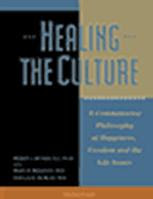
Healing the Culture: A book review

If you want to buy Healing the Culture, try this Life Principles link. You can also order it through ignatius.com, or call 1-800-651-1531.

The faculty of reason should be seen as the common denominator uniting people of various beliefs and persuasions. As rational beings, we have an obligation to use the discipline of logic and reason in addressing human difficulties and controversies.

Healing the Culture, by Robert J. Spitzer, S.J., Ph.D., qualifies as a work of reason. Spitzer employs a step-by-step common sense approach to construct a framework of timeless and universal principles, and applies those principles to current cultural crises, namely, abortion and euthanasia. While disputes over these two issues are typified on both sides by political posturing, anecdotal arguments, and emotional pleas, Spitzer's reasoned and methodical approach is both refreshing and extremely important. It is an example of good philosophy that is practical, rational, and engaging.

The book: Healing the Culture Spitzer begins by defining four levels of happiness. The first level is characterized by immediate gratification, of maximizing pleasure and minimizing pain. The second level is typified by the comparison mentality, of achieving competitive advantage and bolstering one's ego. The third level goes beyond self, toward seeking the good of others. The fourth and highest level of happiness is derived from giving and receiving ultimate or transcendant goodness -- Truth, Love, Justice, Beauty. These four levels move from the immediate to the enduring, from the shallow to the profound.

Next, Spitzer draws connections between one's view of happiness and one's view of other principles: success, self-worth, love, suffering, ethics, freedom, personhood, rights, and the common good. He treats each of these in depth, but perhaps personhood, when looking at abortion and euthanasia, is the critical point. Using rigorous logic, Spitzer concludes, quite reasonably, that every being of human origin should be considered a person, as I have noted in my previous post entitled "Persons". It is important to note that Spitzer does all this in a way that even an unbeliever would find compelling, providing that said unbeliever is honest, willing to think, and is a person of basic good will. It is also important to note the legal and cultural ramifications of these simple but profound ideas.

Pope John-Paul II repeatedly called upon Christians to build a 'culture of life'. Benedict XVI has emphasized the importance of using reason in our dealings with the culture. In my opinion, Healing the Culture fulfills both of these mandates, and is well worth reading, digesting, and sharing.

Tuesday, March 27, 2007

Thanatos antidote

At the end of my 'Thanatos' post below, i touched on a theme that i will now try to expand upon. Namely, that there are alternatives to the cultural despair over consumerism.

Consumerism isn't the only force driving the population control ideology. Materialism and hedonism contribute as well, but these two vices are quite ancient; consumerism is the new kid on the block. Only after we were well into the Industrial Revolution was consumerism even possible - so i believe it deserves special attention and a creative, thoughtful response.

Allow me first to define a couple of key terms. For this topic, a consumer must be defined as someone who consumes resources that will not be replenished within a reasonably brief period of time - let us say within the span of a human life, and/or who produces waste which is not neutralized within a reasonable period of time. Both ends of this industrial, consumerist pattern are problematic, causing harm to other forms of life, and to Earth itself.

The "ism" in consumerism refers to the dogmatic belief that to thus consume is an inherent part of living as a civilized human being, that we must live that way. We're all familiar with the incessant drumbeat message: With every passing year, we consume more resources, produce more waste, and cause more devastation. The 6:00 news tells us of a new environmental crisis; we watch a nature documentary and learn of another endangered species; we open a popular magazine and read of global warming. We accept the word 'consumer' as our rightful moniker, and we meekly take upon ourselves the sinister meaning of that identity. The unspoken, perhaps subconscious logic is clear:

 1. Nature is beautiful but fragile.
 2. Man consumes, and so destroys nature.
 3. Therefore, we are doomed, and it's our own fault.

Perhaps some folks prefer to alter the 3rd point to point to some other people as the sole problem; some may openly advocate drastic population controls. In any case, the general effect is that it evokes a type of low-grade despair. Or maybe panic, and a frenetic search for an immediate panacea. At one level, it can be seen that not all human activity is despicable. Burning natural gas to warm our houses may be consumeristic, but burning wood from a local forest, if done properly, is not. Radioactive nuclear waste may be a serious problem, while kitchen scraps can easily be composted. But it all seems so overwhelming, and these small points so insignificant.

The more intense the despair and panic, the more stark are the counterproductive effects. The public figures producing the loudest and shrillest cries of alarm are often the very ones living in a profusely wasteful manner, while conjuring lame arguments of self-exemption. Despair and panic are like that, producing paralysis and a counterproductive exacerbation of the problems.

Even more problematic: this panic and despair can lead, either explicitly or subconsciously, to a sort of collective self-disgust, and a fear or loathing of our own generative instincts. So we stupidly buy the myth of overpopulation, and turn aside from a generous love of human life. We don't want to thrive, because we are secretly ashamed of our life. (Ironically, i believe that the current cultic obsession with titillating sex also stems from this unaddressed fear of our reproductive powers.)

If these words resonate at all, here is my plea: Let us shake off the mesmerizing effects of this despairing line of thinking. Realize that the second premise of the above logical syllogism is very refutable. We do not have to live in a way that destroys our world. Let us embrace a more intelligent and more constructive syllogism.

That logic begins by recognizing that God created this world for us to live in. We are not an accident, nor are we intruders; we are meant to be here. In truth, we are meant to thrive, and we are meant to be stewards of this world (and, who knows, perhaps eventually beyond, to other parts of the universe!)

We should not expect or even try to turn this around on a dime. It took about 200 years of industrialization to get to our present wasteful state. It may take awhile to climb back out, and into a more healthy and sustainable system of living. My point is that despair and panic are not the way to go. Shrill and desperate cries of alarm tend to paralyze rather than mobilize. The more reasonable way is to first embrace a better syllogism:

 1. God's creation is good.
 2. Man is the pinnacle of God's creation.
 3. Therefore, let us exercise responsible dominion and stewardship.

It all begins with faith, the most reasonable state of mind for a human being.

Tuesday, March 13, 2007

Thanatos

An early twentieth century movement seriously proposed the practice of selective breeding of the human species, usually known as eugenics. Margaret Sanger, a vocal eugenist, openly lamented the unrestricted propagation of "inferior types". She wrote about producing a "race of thoroughbreds", and eliminating "human weeds". (See this link for starters.) Founder of the American Birth Control League, today's Planned Parenthood, she mainly targeted her birth control measures to the poor, immigrants, and other minority groups. These remain the primary target clientele for Planned Parenthood today.

A similar eugenics philosophy lay behind Hitler's pogroms against Jews and other "inferior" peoples. It would seem that eugenics in practice must always become genocide. Well, the Allied forces defeated Hitler militarily, but the poisonous thinking of racism, eugenics, and genocide remains, still espoused by many, whether openly or covertly.

Moreover, beginning in the 1960's or so, another toxic idea related to human propagation began to be fed to us: that our very presence on this planet is a problem; that we by our nature are destroying the earth that we depend upon; we're using up finite resources and producing waste at an ever accelerated clip, the problem grows more acute every year, and the only apparent solution is to reduce our numbers.

Myth (mith), n.: A widely held belief based upon an imaginary or legendary story.
This story, usually told by well-fed academics of Europe and America, seems always to portend an imminent, deadly threshold. I am not discounting or minimizing the real crises and human need in many areas. Yet threshold after threshold is passed, and the anticipated doom doesn't materialize. Indeed, global per capita real income and standard of living appear to be holding steady or even modestly growing. Are there limits to human population growth? I suppose all finite things have limits. Are we near our own limit? I know of no reliable evidence that would suggest that we are, nor have i seen proof linking any particular crisis to a root cause of "too many people". Yet the myth, and the conviction of impending doom, continue to afflict many. (Ah, but there may well be an impending doom to fear - that of the righteous judgment of God upon our ungodly beliefs and practices!)

Now, here's where it gets interesting: Put the two toxic ideas together, and what you get is something very much like today's Planned Parenthood agenda, or the United Nations Population Control programs. Namely, you get the racist and genocidal campaign to 'help' the folks in poorer parts of the world (which just happen to be Hispanic, African, or Asian) to discover the sexual revolution and to have fewer children. You get foreign assistance offered only upon the adoption of liberal abortion laws, forced or coerced sterilization, etc. This was Margaret Sanger's eugenic goal from the get-go: target the 'inferior' peoples, doing whatever is necessary to ensure that they have fewer babies.

Herein lies the poetic irony (and divine judgment?): Demographic trends suggest that the people who have drunk most deeply of the toxic myth are precisely those from whose ranks the myth arose, but who were not targetted for extinction by Sanger and Hitler, nor by the myth makers, nor by current Planned Parenthood and United Nations population controllers. Germany and Japan, for example, are experiencing a severe drop in birth rates, far below replacement levels. France, at two births per woman, scarcely replacement level, has one of the highest birth rates in Europe. Worldwide, all birth rates seem to be slowing, but there is a definite demographic shift away from the formerly dominant and ascendant European stock, to folks from Africa, the Middle East, and Central and South America.

So, now the generalized fear of population growth takes on a more racist tone. Many in the U.S. feel threatened by the growing influx of people from Latin America. Europeans grow more wary of the rising tide of people, largely Muslim, from the Middle East. White Russia may soon become predominately Muslim and Chinese. Much is written, and feelings run high, regarding the perceived shift in demographic power.

I can't help thinking that there must be a connection here... That the eugenics/genocide ideology of Hitler, Sanger, et. al., rooted in racial fear, has now morphed into a sort of Thanatos syndrome, a culture-wide death wish on the part of the very people who were to become Sanger's "race of thoroughbreds", a paralysis of our collective will to propagate and thrive. Ironic that the debased thinking of Sanger and Hitler may actually have helped to fuel the very population changes they most feared!

What about a challenge to the premise: Do we, in fact, have to live in the consumeristic mentality that leads to such anti-life despair? Must we adopt the self-loathing mantra of the population control agenda? Or might we do better to try to rediscover a sustainable way of living, in which human beings are rightly seen, not as a liability, but as a vital resource? I hope to expand upon this hopeful thought.

Thursday, March 1, 2007

Global warming

Amidst all the talk about global warming, it seems someone should be making the following simple point: Heat is just one of many forms of energy. Heat, light, magnetic force, electrical power, kinetic motion, the force of gravity... these are all types of energy. Now, i'm no physicist, but isn't the conservation of energy axiomatic, and included in the first law of thermodynamics? That is, energy cannot be created or destroyed, but only converted from one form into another.

So, consider this: To speak of global warming is to say we are developing an excess amount of heat on our planet, which is to say we are accumulating a surplus of that particular type of energy. Stated in this way, the crisis can be seen as a potential for great advancement. The law of conservation of energy would seem to give unequivocal assurance that the excess heat could be converted into, say, electrical energy. This would solve two problems at once: it would provide a means of absorbing the excess climatic heat energy, and at the same time relieve our dependence upon fossil fuels and nuclear fuels in generating electricity. All that is required to realize this are the engineering details, which i will discuss further below.

The daffy California legislature may ban incandescent light bulbs if they want, and they may even believe that they are doing something worthwhile. But from all the data that i've seen (e.g. these three links), the lion's share of electrical power consumption in most American homes is refrigeration and air conditioning. Make those processes more efficient, and you've really done something significant.

Now, refrigerators, freezers, and air conditioners all employ a mechanical system of absorbing heat from one place (the inside of the refrigerator or the inside of the house), and pumping that heat elsewhere (to the outside of the refrigerator or house). The design specifics may vary, but that's the basic process. The heat energy is not destroyed, only moved from one place to another. In fact, the operation of the mechanics consumes electrical energy and dissipates that energy in the form of heat, resulting in a net loss of electrical energy and an equivalent net gain of heat energy:

    Heat + electrical power -> Heat (transported) + more heat

Well, what if a system could be built which transformed heat energy at relatively low temperatures into electrical energy, thus reversing the net effect of the above:

    Heat -> Electrical power

Think of the ramifications. Instead of consuming electrical power, every refrigerator, freezer, and air conditioner would become a source of energy, putting electrical power back into the grid to be used for other purposes. If done correctly, the entire power grid might even become self-sustaining, needing no outside fuel sources such as coal or nuclear material.

I may as well fantasize further, and say that, with all this nearly free energy, we could then start building massive refrigeration units to convert all our extra global warmth into electrical or other forms of energy. Perhaps the excess electrical energy could be used in electrolysis plants to create hydrogen fuel as a stockpile of stored power for future use, eventually rendering all energy problems obsolete.

Well, as it turns out, there are already ways to convert heat into electricity. The conventional power plant uses heat to generate steam, which drives a turbine generator. This requires intense and massive heat, though, which does not answer the challenge. But new technologies are being developed which may work at lower temperatures. Right now, you can buy thermoelectric modules to produce small amounts of electricity, and soon you may be able to procure thermal diodes to do the same. Other new research uses thermoelectric modules made from cheaper organic materials, making them potentially more affordable and practical. Still other work has demonstrated the creation of electricity from candles, and even from tap water.

So far, these methods are not practical for an efficient redesigning of refrigeration or air conditioning applications. But some of these technologies may be improved, or other techniques may yet emerge which will fit the criteria and produce the revolutionary results discussed above. All that's missing are the engineering details. And, even as i write this, i'm sure that some brilliant young physicist or engineer will soon come along, and tackle those details. Probably he's in grad school right now, or perhaps high school, grade school, or still in diapers. That is, unless he hasn't been aborted. But even at that, surely another one will come along. Just so that one isn't aborted as well. Which brings me to the heart of my proposed solution:

We must come to recognize that people are the greatest resource this world has. I know the myth of overpopulation is a strong one. But it is also a statistically indefensible one; we haven't neared that threshold yet. To think that there is anything to be gained by the agenda of contraception and abortion is to throw the baby out with the bathwater, literally. Human creativity and human genius and human toil and human love are what will solve the problem of global warming, and every other global challenge which we may face. A niggardly fear of babies is counter-productive as well as hateful.

So, in order to insure that the brilliant young engineer does indeed come forward, we need to immediately reverse Roe v. Wade, and impose a strict moratorium on further abortions, regardless of the circumstances. Our global future depends upon it.

Tuesday, January 9, 2007

Stem cell research

They sacrificed their sons and their daughters to the demons; they poured out innocent blood, the blood of their sons and daughters...
   Ps. 106:37-39
For some time now, the debate has raged over stem cell research. Of course, there are huge differences, both scientifically and ethically, between embryonic stem cells - those taken from living human embryos, and stem cells taken other sources such as bone marrow and cord blood. (See this link and also this one).

Despite the lack of promise shown by the embryonic stem cells, legislators like Tom Harkin (D - Iowa) have been insisting that federal tax money should be poured into this research. The use of non-embryonic stem cells is not good enough; we just have to use embryonic stem cells. Evidently, the prospects for success are too slim to attract venture capital, so we also have to fund it with tax dollars.

Now comes the news that embryonic stem cells can more easily be obtained from amniotic fluid (see this article in the Washington Times), in a process which is harmless to both mother and child. These embryonic stem cells seem to actually show some promise.

Does this news affect our newly elected legislators? Not in the least. The push for research that destroys living human embryos moves forward boldly. The bill is scheduled in both houses (HR 3, S 5) for later this week.

It is becoming more and more difficult to rationalize or to find nuanced explanations. I can only conclude that this is intimately connected with abortion rights. Were it not for this connection, the liberals in Congress would be rejoicing in the new scientific finding, and would be eager to avoid the ethical and ideological divisiveness of the avenue they are pursuing. As it is, they reveal more and more just where their hearts are.